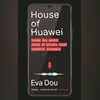
House of Huawei: Inside the Secret World of China's Most Powerful Company
Author: Eva Dou
Publisher: Hachette
Pages: 320
Price: Rs 799
This book offers a portrait of Huawei, the electronics giant from Mainland China. Author Eva Dou, a telecom reporter, has mined many data sources, including Huawei’s internal publications, and stitched together all that is in the public domain.
But there is little here that wasn’t in the public domain. Senior Huawei personnel, including the founder and his family, are media-shy and she didn’t manage to reach them. But the aggregation is useful and even dedicated Huawei-watchers will find new nuggets.
Ms Dou has been cautious about addressing the myriad accusations the company has faced. She mentions the accusations in meticulous detail alongside Huawei’s defences. But it is left to the reader to draw their own conclusions about the merits.
The name Huawei can translate to “China can do it” and was supposedly inspired by a Maoist slogan. Huawei is one of the world’s most controversial entities. Its 2023 revenues were around $100 billion with reported profits of over $12 billion. It is an end-to-end supplier of telecom associated equipment and services. It makes smartphones; network equipment; designs and fabricates its own chips; makes and installs fibre optics cables and submarine cables; manages telecom networks, running services and writing the software. It also designs and runs the world’s most sophisticated face-recognition software. Its “Safe City” surveillance networks literally blanket entire cities.
Huawei has faced serious accusations of various kinds. Among the minor peccadillos, it has routinely navigated bribery charges. It has been accused many times of stealing intellectual property. It has been accused of breaking sanctions in Iran, Iraq, Serbia, and other hotspots.
Huawei has worked with multiple authoritarian regimes. It has installed and runs the surveillance networks that enable ongoing human rights abuses on a vast scale in China’s Xinjiang province. This is one subject on which the book is unequivocal — the evidence is too strong. Huawei is also said to run the surveillance networks that enabled mass arrests during civil disturbances in Hong Kong. It has been accused of setting up back doors in networks installed in other countries to enable espionage on behalf of the People’s Republic. Indeed, it has repeatedly been accused of being an extension of the Peoples’ Liberation Army (PLA), with many of its senior personnel, including its founder, having PLA ties.
Huawei started as a contract manufacturer of telecom switches and fire alarms in the late 1980s. It moved up the value chain, designing switches (when the first accusations of IP theft arose). Then it moved into network equipment, fibre optics, etc.
Huawei is the world’s third-largest smartphone maker. It entered the space late, launching the Honor brand in 2013 (Honor has since been sold) in order to “soften” its image. It repurposed Kirin chips designed for surveillance to run its smartphones. Huawei has a truly weird corporate structure and management philosophy. It is a privately owned, unlisted company with multiple subsidiaries, including shell companies created to interact via cut-outs, with dodgy regimes. Some 60,000 employees own shares and receive dividends. Founder Ren Zhengfei owns 1.4 per cent of Huawei.
The company is run by rotating chief executive officers (CEOs) with several individuals playing musical chairs to become CEO/ chairperson every so often. The “Board” consists of individuals, “elected” by shareholders through an opaque process. The same individuals have been in charge for decades. Every so often, all senior personnel “submit resignations” and are “rehired”.
Huawei’s work culture is driven by a book ( The laws) on corporate governance penned by Ren. The culture is brutal. Salespersons are exhorted to be “wolves”. Employees have committed suicide, suffered broken marriages and endured health problems due to the mandatory long hours and stress. Lavishly entertaining clients has led to liver issues through enforced alcohol consumption. The penchant for taking up work in conflict zones has also meant executives being shot at, and bombed, and on one occasion, it has run telecom networks on both sides of an African civil war.
About 20,000 employees, including most of senior management, are members of the Communist Party. This is a serious, hard-won privilege in the People’s Republic of China (PRC). Ren himself was born in 1944 and served as a “sapper” in the PLA Engineering Corps. A long-term Huawei CEO, Madame Sun Yafang worked for many years in military intelligence. Many senior engineers are also former PLA personnel. The “chief ethics officer” is the formal liaison with the Party.
Ren’s father, an academic and book-seller, was sent to a labour camp for re-education during the Cultural Revolution. So was his father-in-law, who was a Party functionary. Ren joined the PLA partly because it was one way to pursue engineering research without triggering suspicions. He lists his hobbies as reading and writing. He has made many inspiring speeches and written many essays, exhorting employees to work patriotically for the glory of China and Huawei.
Every PRC supremo since the late Deng Xiaoping to Xi Jinping has been photographed visiting Huawei facilities. In 2018, Ren’s daughter, Sabrina Meng, who is the chief financial officer (and occasionally the CEO) of Huawei, was arrested in Canada on an extradition demand from the US. She was on the board of Skymet, a shell company set up by Huawei to install and run telecom networks in Iran, which was then under sanctions. The PRC responded by arresting two Canadian nationals on espionage charges, triggering a prisoner swap orchestrated by Justin Trudeau and Xi Jinping.
The connections between the PLA and Huawei are clear enough. But these may, as the author says, simply be the price of doing business in the PRC. How a company with this sort of structure can become a world-beater is a different question and one worthy of further investigation, assuming one can get deeper into Huawei’s DNA.