The Woman Who Ran AIIMS: The Memoirs of a Medical Pioneer
Few can claim a first-day-at-work as heart-stopping as Sneh Bhargava. The day she walked into All India Institute of Medical Sciences (Aiims) as the institution’s first woman director in October, 1984, then Prime Minister Indira Gandhi, the person who had approved her appointment, was rushed into emergency surgery with severe gunshot wounds. In those overwhelmingly tense moments, Dr Bhargava was pushed into the deep end, forced to manage a situation of monumental national significance. Days later, as the staff at Aiims tended to scores of injured Sikhs and Hindus who were attacked in the anti-Sikh riots, Dr Bhargava ensured that Sikh staff and students on campus felt safe and protected.
It is one of the many anecdotes in Dr Bhargava’s compelling memoir that illustrate her role in some of India’s most transformative medical moments. Now 95 years old, she reflects on how the responsibility of leading an institution like the Aiims was a heavy one, with constant pressures: A changing disease profile with more chronic conditions, a deluge of patients, shortages of funds and nursing staff, a housing crisis for doctors, dealing with obnoxious VIPs, and changing political winds.
Forced into retirement at age 90 by pandemic-induced restrictions, Dr Bhargava began to flesh out her story, told in remarkable detail. As the book traces her personal and professional upheavals and victories, she tracks the movements in the medical profession in India unfolding against the backdrop of global advancement in medicine. Dr Bhargava built her career as a pioneering radiologist, marking many firsts, chief among them being instrumental in bringing ultrasound and CT scanner to India, which changed how diseases were diagnosed. After 30 years at Aiims, six as its director, Dr Bhargava went on to establish the renowned Sitaram Bhartia Institute of Science and Research, and Dharamshila Narayana Superspeciality Hospital.
After studying MBBS at Lady Hardinge Medical College, a series of circumstances led her to specialise in radiology, a field that at that time was not recognised as a vital medical discipline and often dismissed as producing mere “black and white pictures”. It was a charge Dr Bhargava passionately pushed back against, time and again. She enjoyed challenging norms. “Radiology would fulfil my passion of wanting to treat the entire body, not just one or two organs,” she writes. And later: “I was endlessly fascinated by the milky white and luminous images of the body against the inky black but strangely translucent background.” In 1955, she sailed to England to study radiology, the only female student in Westminster hospital’s radiology department.
Returning to India a few years later, Dr Bhargava set to work applying her expertise at Irwin Hospital. In 1961, she joined the radiology department at Aiims, at a time when the field was in a sorry state, hampered by outdated equipment and primitive technology. Dr Bhargava played a key role in shaping the transformation of Aiims — building up several departments, despite opposition and with no political clout of her own. Pushing for radiology to become an integral part of patient care, she took it from a “back-office role into mainstream medicine” and was dubbed the “Indira Gandhi of Aiims” in the process. India is still severely short of radiologists, but she notes how artificial intelligence can bridge those gaps, particularly between urban and rural healthcare.
Told with precision, candour, and wit, Dr Bhargava’s account does not shy away from controversy — or from acknowledging her own shortcomings, as a doctor or a parent. While a few sections feel disjointed and some repetition creeps in, the book is filled with episodes that would engage anyone with even a passing interest in public health. From hospital politics and clashing egos to difficult politicians and controversial appointments — the book details the inner workings of an institution and beyond at a pivotal time of medical advancement. Her reflections on the pressures on doctors, the rise of women in medicine, and changing motivations in the industry are noteworthy — particularly her observation that medicine has, over time, lost much of its reputation as a “noble” profession.

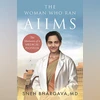 "'The Indira Gandhi of AIIMS': Sneh Bhargava's memoir is a compelling read")












 Connect with us on WhatsApp