Tribals and the Hindutva framework: New book explores RSS's evolving views

From Sarna to Ghar Wapsi, this book breaks new ground on the evolution of RSS's thinking on tribals and complex questions such as their treatment after conversion to Christianity

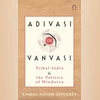
Adivasi or Vanvasi: Tribal India and the Politics of Hindutva
Aditi Phadnis
5 min read Last Updated : Jul 07 2025 | 10:49 PM IST
Adivasi or Vanvasi: Tribal India and the Politics of Hindutva
by Kamal Nayan Choubey 
Published by Penguin Random House India
281 pages   ₹799
  Academic research in this area is sparse, as the book itself reveals. There are many scholarly works on the Rashtriya Swayamsevak Sangh (RSS) but hardly any attention has been paid to the organisation’s outreach to tribals, with the Vanvasi Kalyan Ashram (VKA) being treated as just another Sangh affiliate. And so, though there is little by way of comparison or competition, it would not be faint praise to say that the book is outstanding, for it breaks new ground on the evolution of the RSS’s thinking on the tribal question.
 
With 108,735 active beneficiaries of hostels and education centres, the VKA has become a major pillar of the Sangh Parivar now. It was founded in 1952 by Ramakant Keshav Deshpande and Morubhau Ketkar, with the financial and moral support of the Maharaja of Jashpur, Vijaydev  Bhushan Singh Judev, whose successors later led the movement called Ghar Wapsi. It was posed as the riposte to the activities of Christian missionaries that caused as much concern to the Congress in the 1930s and 1940s as to the RSS. The first chief minister of Central Province (the precursor to modern-day Madhya Pradesh, Chhattisgarh and Maharashtra) was Ravishankar Shukla from the Congress who actually nudged the RSS to form an organisation to stave off separatist tendencies that he felt were being fuelled by missionaries. Parenthetically, Madhya Pradesh was the first state in India to promulgate an anti-conversion law —piloted by the Congress.
 
The author describes the initial ideological and moral struggles of those who led the VKA:  To accept material support from the state or not? This was a core issue as the RSS has time and again described itself as a socio-cultural organisation. Initially, Deshpande was appointed as regional director of the Tribal Welfare Department by Ravishankar Shukla, on the recommendation of Gandhian Thakkar Bappa.  But he resigned because he felt fettered. The challenges would become more complex: Tribal leaders such as Birsa Munda and Jaipal Munda led struggles against the British on land issues. But VKA and the RSS capitalised on the fact that Birsa Munda became a Roman Catholic, returned to Hinduism, and warned tribals about the dangers of proselytisation. Anti-colonial fighter for tribal land rights? Or a tribal who led the movement for the Hinduisation of tribes? Subaltern? Or an advocate for Hinduisation of tribes?
 
How VKA should view organised Hinduism and tribal worship was another big issue. This would segue into the current debate about the place Sarna, the tribal religious code, should have, especially in the current context of the Uniform Civil Code (UCC). While seeking to protect some tribal cultural practices, the VKA has denounced the demand for the Sarna Code, which it sees as a separate religion. And there are other practices, including the issue of beef in the Northeast. The book says that lately, the VKA has supported leftist activism led by the All India Union for Forest People (AIUFP) in the tribal regions, contradicting the Bharatiya Janata Party’s political stance. However, VKA’s stand on state-sponsored violence against tribals remains ambiguous, though it is implacably against Maoist violence. And then there is the complicated question of tribals who have migrated from one tribal area to another (a huge political issue in the North-east, for instance) and the issue of the treatment of tribals who have converted to Christianity. Some scholars argue that as tribals have their own identity, their conversion — whether to Hinduism or Islam or Christianity — should not deprive them of the constitutional benefits they enjoy as tribals. But the book notes that even in 2023, Chhattisgarh Chief Minister Vishnu Deo Sai, who has been active in VKA, has demanded that those who converted should not get reservations in jobs or education as they were no longer tribals.
 
The book has a brief discussion on VKA’s role in leading intellectual discussions on the tribal question in the framework of political thinker Antonio Gramsci. As opposed to organic intellectuals, he considers VKA traditional intellectuals. There could be some definiti­onal problems with this proposition.
 
The VKA may be a part of the RSS but in some ways it is ploughing a lonely furrow. It has not held back from criticising anti-tribal statements by some ministers in the Narendra Modi government while being careful in excluding Mr Modi from any criticism. But VKA’s legacy is also rooted in statements like the one Golwalkar made in 1969. When asked if samskaras (values) could be imparted to the nomadic tribes, his answer was: “If we could domesticate even the wild animals roaming the jungles, can we not persuade our people to take the better and more stabilised ways of life? Certainly we can, provided we display the human touch”.        
 
Everyone who is interested in Indian society and politics needs to read this deeply researched book that is brimming with new ideas.

One subscription. Two world-class reads.

Already subscribed? Log in

Subscribe to read the full story →
*Subscribe to Business Standard digital and get complimentary access to The New York Times

Smart Quarterly

₹900

3 Months

₹300/Month

SAVE 25%

Smart Essential

₹2,700

1 Year

₹225/Month

SAVE 46%
*Complimentary New York Times access for the 2nd year will be given after 12 months

Super Saver

₹3,900

2 Years

₹162/Month

Subscribe

Renews automatically, cancel anytime

Here’s what’s included in our digital subscription plans

Exclusive premium stories online

  • Over 30 premium stories daily, handpicked by our editors

Complimentary Access to The New York Times

  • News, Games, Cooking, Audio, Wirecutter & The Athletic

Business Standard Epaper

  • Digital replica of our daily newspaper — with options to read, save, and share

Curated Newsletters

  • Insights on markets, finance, politics, tech, and more delivered to your inbox

Market Analysis & Investment Insights

  • In-depth market analysis & insights with access to The Smart Investor

Archives

  • Repository of articles and publications dating back to 1997

Ad-free Reading

  • Uninterrupted reading experience with no advertisements

Seamless Access Across All Devices

  • Access Business Standard across devices — mobile, tablet, or PC, via web or app

Topics :BOOK REVIEWbooksBook readingTribalsHindutva

Next Story