The peacemaker the world forgot: U Thant's UN and the Cold War's edge

How a self-effacing, self-taught school headmaster from a small Burmese village became one of the most influential figures at the UN in the 1960s
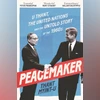
U Thant Book
Peacemaker: U Thant, the United Nations and the Untold Story of the 1960s
Shyam Saran
5 min read Last Updated : Oct 22 2025 | 11:27 PM IST
Peacemaker: U Thant, the United Nations and the Untold Story of the 1960s
By Thant Myint-U
Published by Juggernaut
368 pages ₹999 
If one had to find a compelling example of historical revisionism and erasure, one will find it in Thant Myint U’s extraordinarily well-researched biography of his grandfather, U Thant, the only Asian to grace the office of Secretary General of the United Nations (UNSG) from 1961 to 1971. In the two chapters — Missile Crisis and Havana — the author provides a blow-by-blow account of how U Thant’s extraordinary diplomatic skills and credibility enabled him to resolve a crisis that threatened a nuclear Armageddon. His successful mediation between the two superpowers — the United States and the then Soviet Union — brought the world back from the brink of all-out war. It is this saga of statesmanship that has been mostly erased from subsequent history written by the self-declared and triumphant victors of the Cold War. 
The decade in which U Thant served as the UNSG was easily the best years of the world body, enjoying both prestige and agency, which it had neither enjoyed before since its inception in 1945 nor has regained subsequently. It would be no exaggeration to say that it was U Thant’s leadership that gave the world body the ability to navigate the complex and shifting geopolitics of the Cold War years. He was sought after by American presidents, Soviet and European leaders. He was seen as a genuine champion of the constituency of developing countries, now coalescing in the Non-Aligned Movement set up in 1961. He had easy access to leaders across the world and enjoyed the company of leading lights of the Western world, including well known intellectuals, diplomats, politicians, writers, artistes and business leaders. He harnessed their prestige and influence to his role as the first diplomat of the world. 
It is surprising how someone from a traditional Burmese family of modest means, who was mostly self-taught and had served as a headmaster of a school in an obscure village, adapted so effortlessly to the arcane world of international diplomacy. He chose his aides well. They included C V Narasimhan, an Indian Civil Service officer who was one of the original international civil servants at the UN. There was Ralph Bunche, a former American State Department officer, who became the chief political advisor to U Thant. They were intensely loyal to him and played a critical role in his transformation from a modest self-effacing diplomat into a most highly respected head of a world body already threatened by irrelevance in the power play among its most influential members. 
The book chronicles both the triumphs and setbacks experienced by U Thant as UNSG during the decade of the 1960s. His role in promoting a ceasefire between India and Pakistan after the 1965 war harks back to a time when acceptance of mediation was not seen as an admission of weakness. It comes as a surprise that it was U Thant who had suggested an India-Pakistan peace summit at Tashkent, then part of the Soviet Union. 
The book details how U Thant expended a huge amount of political capital in trying to bring the Vietnam War to an end but failed because of hubris on the part of the United States. In 1965, when the US was despatching several more thousand troops to Vietnam, U Thant was prescient in warning an eventual American defeat: “The longer the war goes on, the end result will be a South Vietnam completely in the hands of the Communists.” This made him unpopular in Washington and by the time Richard Nixon took over the presidency in 1969, both the UN and U Thant were sidelined. 
The chapters on Gaza and the Sinai and on the Six Day War are of special interest as the latest destructive and genocidal war has ravaged the Gaza Strip and all the ancient racial and religious animosities have been reignited in all their ferocity. It is no surprise that U Thant’s efforts to prevent hostilities in 1967 were unsuccessful and he became the scapegoat blamed by both sides for mis-steps which could not be laid at his door. Both the Israelis and the Egyptians were guilty of deceit and it was the UN which again had to play peacemaker in the aftermath of the war.
 
At the end of his second term in 1971, the world had changed dramatically. Richard Nixon had made his historic opening to China and a US-China alliance backed Pakistan in its brutal suppression of its own citizens and co-religionists in its eastern wing. U Thant mobilised what resources he could to provide aid for the several million refugees from East Pakistan streaming into India but in the last months of his tenure he knew he was unable to take on the US, which would not be deflected from a blanket support to Islamabad.
 
U Thant was bid farewell by many admirers and friends. He left an indelible mark on the UN and was a defining figure in the decade of the 1960s. He died in 1974 but descended into rapid obscurity in the tumultuous years that followed. It is fitting that his grandson has salvaged his extraordinary legacy and set the record straight in an engaging biography.
 
The reviewer is a former foreign secretary  

One subscription. Two world-class reads.

Already subscribed? Log in

Subscribe to read the full story →
*Subscribe to Business Standard digital and get complimentary access to The New York Times

Smart Quarterly

₹900

3 Months

₹300/Month

SAVE 25%

Smart Essential

₹2,700

1 Year

₹225/Month

SAVE 46%
*Complimentary New York Times access for the 2nd year will be given after 12 months

Super Saver

₹3,900

2 Years

₹162/Month

Subscribe

Renews automatically, cancel anytime

Here’s what’s included in our digital subscription plans

Exclusive premium stories online

  • Over 30 premium stories daily, handpicked by our editors

Complimentary Access to The New York Times

  • News, Games, Cooking, Audio, Wirecutter & The Athletic

Business Standard Epaper

  • Digital replica of our daily newspaper — with options to read, save, and share

Curated Newsletters

  • Insights on markets, finance, politics, tech, and more delivered to your inbox

Market Analysis & Investment Insights

  • In-depth market analysis & insights with access to The Smart Investor

Archives

  • Repository of articles and publications dating back to 1997

Ad-free Reading

  • Uninterrupted reading experience with no advertisements

Seamless Access Across All Devices

  • Access Business Standard across devices — mobile, tablet, or PC, via web or app

Topics :Cold WarbiographyVietnam WarUN peacekeepingBOOK REVIEWBook readingBS Reads

Next Story



