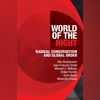
World of the Right: Radical Conservatism and Global Order by Rita Abrahamsen & others
Published by Cambridge University
World of the Right: Radical Conservatism and Global Order is important enough to merit a review despite having been in circulation already for several months. The issues raised by its authors and the insights they provide on what is a powerful political ideology sweeping across the world, are decidedly current and of continuing relevance. The six authors are all eminent political scientists and historians. Rita Abrahamsen, Michael C Williams, Srdjan Vucetic and Alexandra Gheciu are all from the University of Ottawa. Jean-Francois Drolet and Karin Narita are academics from the UK. They seek to unpack the common features of the wide spectrum of ideologies, which may be grouped as the radical right. The latter are unapologetically nationalist, even nativist and subscribe to a populist agenda. They harbour a “deep disdain” for the experts and the technocratic and managerial elites who run both governments and multilateral agencies and impose a uniform set of values and norms that underpin the so-called liberal international order. At first glance, it may seem that the right, being fervently nationalist, may not be interested in seeking an international platform for propagating their ideas, but the authors show that these movements are inter-linked across borders and share a strong sense of affinity. There are forums such as the US-based Conservative Political Action Conference (CPAC), the National Conservative Conference, or Natcom, and the Madrid-based Madrid Forum, which seeks to promote a pan-Hispanic identity and the Catholic faith. Bharatiya Janata Party delegates have participated in Natcoms.
Contrary to the impression that the radical right has had a sudden and surprisingly swift ascent to ideological assertiveness and political power, the authors show how this ideology has been brewing for a long time, with doctrinal preparation and structured political action. One may trace its beginnings to the French “Nouvelle Droite”, or the New Right, which began to gain prominence in the 1960s.The initial effort was to dispel the taint of fascism from the post-war right ideologies and to offer a compelling critique of the post-war order, which espoused universal values and norms upheld by multilateral institutions such as the United Nations. It is in the ensuing decades of the 1970s and the 1980s that a more comprehensive critique began to appear, along with a road map towards gaining both ideological and political ascendency. And this is where the story really becomes interesting. The road map draws from the ideas of Antonio Gramsci, the Italian Marxist and anti-fascist figure, who spent years in prison in Mussolini’s Italy during the interwar period. He famously described this era of ascendant fascism as “an age of monsters”. And yet it is his ideas that have been co-opted openly by the radical right in fashioning its own political programme.
Gramsci’s key contribution was to argue that while the economic and social infrastructure is determined by the structure of production in a country, this was not sufficient to gain and to hold on to political power. For that it was necessary to create a dominant culture that encompassed values, norms, perceptions, beliefs, sentiments and even prejudices. This enables a “degree of consent and ideological consensus, which prevents a major clash between the oppressors and the oppressed in any social order”. In short, the people or masses, or at least a majority of them, are co-opted by the ruling elite. Mere coercive power would not suffice. It is this “hegemony”, which has to be attacked and dismantled before a new order can replace it. Gramsci put forward the idea of constructing a countervailing cultural establishment, a “counter-hegemony” independent of the dominant cultural apparatus and able to generate its own system of beliefs. Politics is, in this sense, downstream from culture. And this is what the radical right has been engaged in for several decades.
Interestingly, even ostensibly socialist countries like China, seem to share some of the characteristics of the radical right, including the current stress on ideological rectitude, nationalist pride and claim to civilisational exceptionalism. There are sections among the right who see China as an exemplar in some ways.
What is the global order that the radical right wishes to establish in place of the liberal order which it despises? This is not clear. An order cannot be built on ideological affinity alone. There must be a coherent structure and at least some rules of the game and an acknowledgement of leading players and/or institutions for upholding the order. That is nowhere in sight.

 "World of the Right: Book challenges idea of a sudden radical-right ascent")











