The Indian Space Research Organisation (Isro) is all set to launch its heaviest communication satellite, CMS-03, from the Satish Dhawan Space Centre in Sriharikota on Sunday at 5:26 pm.
The launch will take place on one of Isro's most powerful rockets, which is popularly dubbed ‘Bahubali.’ Here is a look at why the rocket is nicknamed Bahubali, what its key features are, and why it has been chosen to carry one of the heaviest satellites to date.
What Is Isro’s ‘Bahubali’?
‘Bahubali’ is the nickname for Isro’s most powerful rocket, the LVM3 (Launch Vehicle Mark-3). It got the nickname because of its strength and ability to carry heavy payloads, just like the strong movie character Bahubali.
This rocket is 43.5 metres tall, weighs 640 tonnes, and can carry satellites weighing up to 4,000 kg to Geosynchronous Transfer Orbit (GTO) or 8,000 kg to low-earth orbit. The LVM3 gives India self-reliance in launching heavy satellites, which earlier had to be sent on foreign rockets.
Key features of LVM3
Height: 43.5 metres
Vehicle diameter: 4.0 metres
Heat shield diameter: 5.0 metres
Number of stages: 3
Lift-off mass: 640 tonnes
What is the rocket carrying?
The rocket will carry the CMS-03 satellite, which weighs about 4,410 kg and will be placed in a GTO. Once in orbit, CMS-03 will provide multi-band communication services over a wide region that includes the Indian landmass and nearby ocean areas.
The CMS-03 satellite is designed to improve telecom, television broadcasting, and broadband services across India and its surrounding oceans. It will replace older satellites and help strengthen connectivity for remote regions, ships, and aircraft over the Indian Ocean.
How does the rocket work?
The rocket works in three stages. In the first stage, two giant boosters called S200 solid boosters fire up together to lift the rocket off the ground. These boosters are packed with solid fuel that burns very quickly, producing a strong thrust to overcome the earth’s gravity. They burn for about 134 seconds (a little over two minutes) before separating and falling away once their fuel is used up.
In the second stage, known as the L110 liquid core stage, the main liquid engine starts working while the solid boosters are still burning — about 113 seconds into the flight. It uses liquid fuel, which allows more precise control over the rocket’s movement. As the rocket climbs higher, about 115 km above the earth, the payload fairing (the top cover that protects the satellite during launch) opens and drops off since there’s no more air resistance.
Finally, the third stage, called the C25 cryogenic stage, takes over after the liquid stage completes its job at around 313 seconds. “Cryogenic” means it runs on super-cold fuel stored at extremely low temperatures. This stage gives the final, powerful push needed to place the satellite into space. It continues burning until the satellite reaches its target — the GTO, a very high orbit roughly 36,000 km above the earth.
Why is the launch important?
If the launch is successful, it will become the heaviest satellite ever launched from the Indian soil. It will reaffirm LVM3’s capability to let India launch heavy satellites independently, without depending on foreign launchers. Meanwhile, the CMS-03 will support digital connectivity, disaster management, and secure communication services, marking another major step forward in India’s space journey.

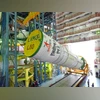 "Explainer: What is Isro's 'Bahubali' and what is it carrying to space?")


 Connect with us on WhatsApp