On Monday, Nagpur city in Maharashtra witnessed violent clashes and arson following demands by pro-Hindu groups for
the removal of Mughal emperor Aurangzeb’s tomb. Over 30 police personnel were injured, with shops and vehicles gutted, leading to a curfew in several areas. Similar clashes occurred in June 2023 in Maharashtra’s Kolhapur after social media posts allegedly glorified the Mughal ruler.
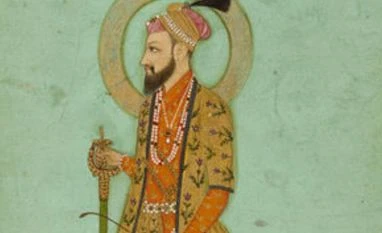
Aurangzeb, the 17th-century Mughal emperor, remains a polarising figure. His over 50-year reign saw significant economic growth for India, but he is often remembered as a ruthless tyrant who allegedly hated music and ordered the destruction of several Hindu temples. While popular narratives describe his policies as intolerant towards non-Islamic faiths, some historians argue they were more politically motivated.
Aurangzeb’s ‘reign of terror’
Born Muhi-ud-Din Muhammad on November 3, 1618, in Dahod, Gujarat, Aurangzeb was the third son of Mughal emperor Shah Jahan and Mumtaz Mahal. He ascended to the Mughal throne in 1658 after a power struggle, which included defeating his brother Dara Shikoh and imprisoning his father until the latter’s death.
Unlike his great-grandfather Akbar, known for his secular policies, Aurangzeb was less tolerant towards non-Muslims. He re-imposed the jizya tax on non-Muslims, which had been abolished by Akbar. Aurangzeb also ordered the destruction of some Hindu temples. The most noted act of his tyranny was the execution of the ninth Sikh Guru, Tegh Bahadur, for refusing to convert to Islam. The Zafarnama, a letter written in 1705 by the tenth Sikh Guru, Gobind Singh, indicts Aurangzeb for moral and spiritual bankruptcy, highlighting Guru Tegh Bahadur’s sacrifice to save Hindus from forced conversion.
Aurangzeb’s achievements
Aurangzeb’s nearly 50-year reign from 1658 to 1707 marked the Mughal empire’s greatest territorial extent, with significant military campaigns in South India. He successfully conquered the Deccan states, including Bijapur in 1686 and Golconda in 1687, extending the empire to cover about 4 million square kilometers by 1689, with a population over 158 million. His campaigns also reached southern regions like Tanjore and Trichinopoly, though maintaining control was challenging.
Historian Angus Maddison estimates that in 1700, India accounted for approximately 25 per cent of the global GDP, surpassing the combined GDP of Europe at that time. This period also marked a phase of proto-industrialization, with India producing about 25 per cent of the world’s industrial output up until the 18th century, excelling in sectors such as textiles, shipbuilding, and steel.
Aurangzeb’s personal life included copying the Quran and sewing caps for a living, reflecting his piety, which contrasts with the ruthless ruler image often portrayed.
Divide among historians
While the destruction of temples under Aurangzeb’s rule is highlighted, some historians note that he made exceptions in granting land and support to places of worship of Hindus and other faiths. In ‘Aurangzeb: The Man and the Myth,’ historian Audrey Truschke notes the grant given by Aurangzeb to Jangam, a Shaivite group. Truschke also claims that there was a higher proportion of Hindus in Aurangzeb’s administration compared to Akbar, arguing that his actions were often politically driven, not solely religious. In 'Medieval India: From Sultanat to the Mughals (Volumet 2),' historian Satish Chandra notes that the Mughal ruler commissioned grants to some of the "Vaishnava temples at Vrindavan, to the jogis at Jakhbar in Punjab, to the Nath Panthi jogis in Sarkar Nagaur, and grant of 100 pakka bighas of land to Panth Bharati in pargana Siwana in Rajasthan." He also gave grants to the gurdwara of Guru Ram Das in Dehradun, Chandra states.
However, historian John F Richards opines that Aurangzeb’s ultimate aim was the conversion of non-Muslims to Islam. In his book ‘The Mughal Empire,’ part of The New Cambridge History of India series, Richards states, “Whenever possible the emperor gave out robes of honour, cash gifts, and promotions to converts. It quickly became known that conversion was a sure way to the emperor’s favour.”
Contested legacy
Aurangzeb’s legacy remains deeply contested, with interpretations of his rule varying between tyranny and pragmatism. While his policies contributed to the Mughal Empire’s territorial expansion and economic strength, his religious intolerance and political ruthlessness left lasting scars. As debates over his reign continue to fuel contemporary tensions, his place in history remains as divisive as ever.

 "Who was Aurangzeb, 17th-century Mughal ruler who remains controversial?")


 Connect with us on WhatsApp