PM Modi indicates Budget 2018 may not be populist, open to more changes in GST

The PM also rejected criticism of providing jobless growth, saying "lies" were being spread about employment generation
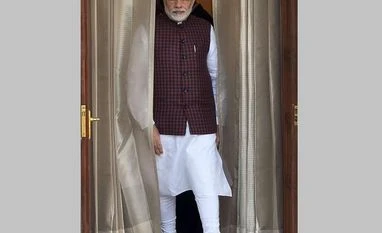
Prime Minister Narendra Modi
Prime Minister Narendra Modi arrives for a meeting with his Israeli counterpart Benjamin Netanyahu at Hyderabad House in New Delhi. Photo: PTI
Archis Mohan New Delhi
Last Updated : Jan 22 2018 | 11:47 AM IST
With barely 10 days for the presentation of the fifth and final Budget of the current term of his government, Prime Minister Narendra Modi has indicated it might not be populist.

In an interview to the Times Now television channel, telecast on Sunday evening, the PM said he was open to more changes in the goods and services tax (GST). Its implementation was a collective exercise involving ruling and opposition parties; he accused those having termed it a ‘Gabbar Singh Tax’ of “insulting" Parliament.

The PM also rejected criticism of providing jobless growth, saying "lies" were being spread about employment generation and furnished data from a recent study to say seven million jobs have been created. However, he acknowledged farm distress. He said it was the responsibility of central and state governments to identify and address farmer issues.

Modi also pledged his government would stay the course on reforms that had pulled out India from being among the 'fragile five' economies of the world to being a 'bright spot'.

In the interview, telecast on the eve of his leaving for Davos to attend the World Economic Forum meet, the PM said it was a myth that common people expected “freebies and sops” from a government. He was asked if the final full Budget of his government would be a populist one, given that the Lok Sabha election was nearing. “Those who have seen me as the chief minister (of Gujarat) and also as the prime minister (would know) the common man does not want all these things. It is a myth," he said.

The common man, said Modi, expected honest governance, and his government was taking decisions to fulfil these needs and aspirations. Asked specifically if he’d resist populism in the Budget to be presented on February 1, he said it needed to be decided if the country needed to grow and become strong. 

The PM also highlighted his government’s success in reining in the fiscal deficit. He said price rise had averaged three per cent annually in the past three years as against 10 per cent previously. Foreign investment inflow had more than doubled to $62 billion; the fiscal deficit has been brought down to 3.5 per cent of Gross Domestic Product from over 4.5 per cent, and the current account deficit had come down to one to two per cent, from four per cent.
On demonetisation, the PM said the people had supported the decision. He criticised the Congress for opposing the Bill to criminalise ‘triple talaq’, and spoke at length about the need for the country to rid itself of the ‘Congress culture of politics’, representing dynastic leadership, casteism, corruption and hunger for power. The PM said political parties needed to stay away from the recent controversy in the judiciary. 

On jobless growth, the prime minister said in the past one year, seven million new provident fund accounts had been opened for youth between 18 and 25 years of age. "Doesn't this show new employment?" he asked. 

Doubling of road construction in three years could not have happened without employing people and so with doubling the rate of rail track laying, he said. Also, programmes like electrification and work on ports gathering pace could not have happened without generating jobs. 

On the judiciary, the PM said it “has a very bright past; they are very capable people. They will sit together and find a solution to their problems". On the current controversy within the apex judiciary: “The government must stay away. Political parties must also keep out of it."

Modi also stressed the need for simultaneous Lok Sabha and state assembly polls. Adding that among other things, frequent polls led to populism and political parties making tall promises.

The PM also ruled out any talks with the separatists in Jammu and Kashmir. He said his government will not talk to those who don't have faith in the Constitution of India.

One subscription. Two world-class reads.

Already subscribed? Log in

Subscribe to read the full story →
*Subscribe to Business Standard digital and get complimentary access to The New York Times

Smart Quarterly

₹900

3 Months

₹300/Month

SAVE 25%

Smart Essential

₹2,700

1 Year

₹225/Month

SAVE 46%
*Complimentary New York Times access for the 2nd year will be given after 12 months

Super Saver

₹3,900

2 Years

₹162/Month

Subscribe

Renews automatically, cancel anytime

Here’s what’s included in our digital subscription plans

Exclusive premium stories online

  • Over 30 premium stories daily, handpicked by our editors

Complimentary Access to The New York Times

  • News, Games, Cooking, Audio, Wirecutter & The Athletic

Business Standard Epaper

  • Digital replica of our daily newspaper — with options to read, save, and share

Curated Newsletters

  • Insights on markets, finance, politics, tech, and more delivered to your inbox

Market Analysis & Investment Insights

  • In-depth market analysis & insights with access to The Smart Investor

Archives

  • Repository of articles and publications dating back to 1997

Ad-free Reading

  • Uninterrupted reading experience with no advertisements

Seamless Access Across All Devices

  • Access Business Standard across devices — mobile, tablet, or PC, via web or app

Next Story



