
Govt should focus on capital expenditure in interim Budget: Former NITI VC
He said because of rising indirect tax revenues and also the widening direct tax base, the finance minister will also achieve fiscal consolidation targets
 "Govt should focus on capital expenditure in interim Budget: Former NITI VC")
Explore Business Standard

Associate Sponsors
Co-sponsor
He said because of rising indirect tax revenues and also the widening direct tax base, the finance minister will also achieve fiscal consolidation targets
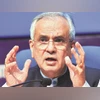
Former NITI Aayog vice chairman Rajiv Kumar on Wednesday said the government needs to continue its focus on capital expenditure in the upcoming interim budget, as private investment is 'still weak' and there is a need to bridge infrastructure gap, which has been 'plaguing' the Indian economy.
Kumar noted that increase in capital expenditure during the Modi government period is showing results in terms of the much better quality of the infrastructure and this was needed to make Indian industry globally competitive.
He said because of rising indirect tax revenues and also the widening direct tax base, the finance minister will also achieve fiscal consolidation targets.
"The capex thrust will continue because the private investment still remains a bit weak. And also, we need to overcome the infrastructure deficit that has plagued our economy and also the logistics cost, which are very high and can only be covered by rising public capital expenditure" he told PTI in an interview.
According to Kumar, because of a significant improvement in the tax-to-GDP ratio, the rising capex will still enable the finance minister to maintain the glide path for fiscal consolidation which was announced last year.
"So I think both will be achieved," he said.
According to Kumar the theme of the upcoming interim budget will be continued focused on investment or fiscal consolidation.
Finance Minister Nirmala Sitharaman will present the interim budget on February 1 in the Lok Sabha. Interim budget is presented before Lok Sabha elections by the government to meet April-July period expenses.
Going forward, Kumar said private investment will also pick up and that will then reduce the pressure on the government to increase its capital expenditure.
Sitharaman in her last year's budget speech, had announced hiking the capital expenditure by 33 per cent to Rs 10 lakh crore for infrastructure development for 2023-24.
Replying to a question on the government's medium-term fiscal deficit target, Kumar said, "We should stick to that target and it will require the finance minister to revive the asset monetisation programme and the public sector enterprise privatisation program, which will not happen in this budget because this is only an interim budget."
Sitharaman in her last Budget had announced a lower fiscal deficit target of 5.9 per cent for FY24.
According to Kumar, when the July budget is presented, then those two categories will be given due attention because it is only through that the government can reduce the public debt to GDP ratio.
"And once that goes down, then the fiscal deficit target can be achieved and that fiscal consolidation target can also be achieved," he observed.
On India's current macroeconomic situation, Kumar said because of the government's domestic capex push and domestic demand, the country's economy will continue to grow at about 7 per cent even in 2024-25.
According to the latest government data, the Indian economy is estimated to grow at 7.3 per cent in 2023-24 against 7.2 per cent in the previous fiscal.
To a question on youth unemployment in the country, Kumar said it has been pointed out by many people that the growth is not translating into an adequate number of jobs.
"And that is also reflected in the quite weak consumption demand that we have noticed because the growth in consumption demand is less than 5 per cent While the GDP growth is about 7 per cent, " he said, adding that now that represents a weakening of the household demand, expenses and rising inequality in the economy.
(Only the headline and picture of this report may have been reworked by the Business Standard staff; the rest of the content is auto-generated from a syndicated feed.)
First Published: Jan 31 2024 | 11:34 AM IST

