Tata Consumer Products was witnessing a significant shift in consumer behaviour and business models as customers were increasingly becoming more health conscious and seeking organic options, P B Balaji, non-executive, non-independent director at the fast-moving consumer goods (FMCG) unit of the Tata group, told shareholders at the company’s annual general meeting (AGM) here on Wednesday.
Balaji chaired the AGM as the group’s Chairman N Chandrasekaran was in New Delhi in connection with the relief operations following last week’s Air India crash.
Talking about the B787 crash in Ahmedabad, Balaji said in his opening address: “To lose a single person, we know, is a tragedy but for so many deaths to occur at once is incomprehensible. This is one of the darkest days in the Tata group's history. Words are no consolation right now but our thoughts are with the families and the loved ones of the people who died and who were injured in the crash. We are here for them.”
“India remains one of the fastest growing large economies in the world, with GDP (gross domestic product) growth estimated at north of 6 per cent. Against this backdrop, we are witnessing significant shifts in consumer behaviour and business models. Consumers are becoming more health-conscious, seeking better-for-you and organic options. There is a clear premiumisation trend, even in staples,” he said.
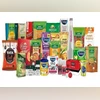
While talking about acquisitions, Balaji said, " You have your antennas up. If there's something sensible at the right price and it fits in well with our portfolio, we will do that. But rest assured, we have sizable amount of gunpowder with us, and therefore growing organically will be the first focus, and inorganic growth will be more bolt on."
Balaji added that distribution was being reshaped by quick commerce (qcom) but physical retail remained deeply relevant. “At the same time, artificial intelligence (AI) is rapidly transforming every function, from demand forecasting and content generation to inventory optimisation and pricing intelligence. Companies that embed AI deeply into operations will lead the next phase of value creation,” he said, adding: At Tata Consumer, we are leveraging these trends with a bold strategy, disciplined execution, and an ambition to build a future-ready FMCG powerhouse.”
Five years ago when the company was formed, Balaji said, it had a largely single-category footprint of tea and coffee. In the five years, it has undergone a significant transformation and today the company was among the fastest-growing F&B (food and beverages) companies in India, operating across multiple categories and brands.
He also said that innovation was a critical muscle for an FMCG company, and over the last five years, Tata Consumer had significantly scaled its innovation efforts, launching over 150 products, and its innovation-to-sales ratio had grown from 0.8 per cent in 2019-20 (FY20) to 5.2 per cent in FY25, which was among the best in the industry.
“Digital is no longer a vertical. It is embedded across how we operate, go to market and engage with consumers. We have deployed several high-impact AI use cases across sales, marketing, sourcing, and R&D (research and development),” Balaji said.
He also said that the company has continued to strengthen its execution on emerging channels, with ecommerce (ecom) contribution growing over five times, enabled by exponential growth in qcom. “As we look to the future, we are deepening our focus on quick commerce, pharmacy, and food services as high potential emerging channels,” he told shareholders.
“We see opportunity in creating an FMCG powerhouse and building brands of tomorrow for the modern Indian and global consumer. Our investments in AI, talent, and digital ecosystems will help us operate with greater precision and speed,” he said.
Answering shareholders' questions on Starbucks, Balaji said the company was focused on market expansion at this point in time and, therefore, there were many store additions. “Same store profitability is under control, and most of the losses that you see is because of the expansion that you're seeing in terms of stores that are being put in place,” he added.

 "Tata Consumer products keeps its 'antennae up' for strategic buys")

