Home / Economy / Interviews / Would be premature to say if people have appetite for MARS: PFRDA's Mohanty
Would be premature to say if people have appetite for MARS: PFRDA's Mohanty
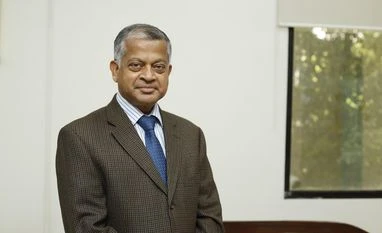
New chairman of PFRDA Deepak Mohanty tells Indivjal Dhasmana that systematic withdrawal plan as permissible under the current statute would soon be introduce
5 min read Last Updated : Apr 30 2023 | 11:06 PM IST
New chairman of the Pension Fund Regulatory and Development Authority (PFRDA) Deepak Mohanty tells Indivjal Dhasmana that systematic withdrawal plan as permissible under the current statute would soon be introduced. However, a complete systematic withdrawal plan could only be implemented if the statute is changed. He also said the minimum assured return scheme (MARS) would be notified in due course. Edited excerpts:
Q) PFRDA has planned to come out with a minimum assured return scheme (MARS) and the product is expected to be launched in the current financial year. What happened to that plan?
Ans) This proposal has been in the works for some time. We have done wider consultations. We also have constituted an advisory committee and appointed a consultant to design MARS. It has also gone through the proposal. The issue is that we have to come out with a product which is attractive to investors. At the same time, we have to balance the risks. Once the guarantee comes in, the cost goes up. We also need to think about the capital. These are various issues we are deliberating on. Some ideas have come. Hopefully we will be able to come out with MARS in due course.
Q) What will be its salient features like rate of returns, minimum capital required, lock-in period for investors etc?
Ans) One feature would be that capital of the investor would be guaranteed with some return. We will have to see how to manage the situation if there is upside and if there is down side. That has to be worked out.
Q) Do you think that MARS can arrest the tendency of some states to opt out of the new pension (NPS) and embrace the old pension system (OPS)?
Ans) MARS is an additional product/feature under NPS. States can see if they want to go with the new guaranteed product. As things stand now, state governments have different schemes, the Centre has different schemes. There is a fixed pattern of investments. We need to see how to take this product forward. It would be premature to say whether there would be an appetite for this product or not because this product would be a bit costlier than other products. Market-determined rate of interest is itself a risk but NPS has given a very good rate of returns. Equity scheme has given 11.8 per cent return, central government scheme has given 9.8 per cent and state governments scheme around 9.3 per cent since inception. These are very good returns compared to market returns.
Q) You recently gave a statement that fully annuitized NPS will give better returns than 50 per cent of last basic salary drawn. Could you give some more details of your calculations in this regard?
Ans) If you are staying fully in NPS with around 33-35 years of service, as things stand now it would give returns at your retirement which would be comparable to 50 per cent of last drawn basic salary. It is possible to have that even though market-determined rates of returns are not guaranteed and the situation may change in the future considering volatility of annuity rates.
Q) You are a member of the committee headed by finance secretary T V Somanathan which is looking into reforming NPS for government employees. What would be the broad direction of that reform in the context of various states opting out of NPS?
Ans) I would not speculate on what the committee’s thinking would be. I would only say that terms of reference require us to look at NPS and see how this could be made better for the government employees. So, the committee would reflect on that side. The broader issue is NPS is fully funded and OPS is not. Globally too there is a movement towards defined contribution plans even when there are some elements of defined benefits. To sustain unfunded schemes such as OPS for long becomes difficult.
Q) PFRDA had earlier announced to come out with alternatives to annuity based returns such as systematic withdrawal plan. What is the progress in this regard?
Ans) Annuity by insurance company falls under the purview of IRDAI. We have made some progress. We plan to offer pay out within the PFRDA statute. Statute says that 40 per cent of the corpus has to be invested in annuities. So for the remaining limit, we are planning to offer this facility. This means that one can opt for a systematic withdrawal plan for 60 per cent of the funds. The PFRDA board has accorded that the systematic withdrawal can be offered as an additional option. CRA (Central record keeping agency) and other intermediaries are changing their systems for the plan. So, it should soon get implemented. For a full systematic withdrawal plan, the statute will need to be changed.
Q) What is your outlook on asset under management (AUM) for various schemes regulated by PFRDA during the current financial year?
Ans) We already have crossed Rs nine trillion AUM as we speak now. We would be crossing a landmark of Rs 10 trillion by next quarter end.




