The Union Cabinet on Wednesday approved a six-year central scheme aimed at achieving self-sufficiency in pulses production, with a financial outlay of Rs 11,440 crore.
The "Mission for Aatmanirbharta in Pulses", approved by the Union Cabinet chaired by Prime Minister Narendra Modi, will be for the period from 2025-26 to 2030-31. The mission follows Finance Minister Nirmala Sitharaman's announcement in the 2025-26 Budget.
The mission will particularly focus on increasing production of tur, urad and masur, with assured procurement by government agencies National Agricultural Cooperative Marketing Federation of India (Nafed) and National Cooperative Consumers' Federation of India Ltd (NCCF) from registered farmers.
"We are going to start a mission on pulses for six years. Several initiatives will be taken under this," Information and Broadcasting Minister Ashwini Vaishnaw told reporters after the Cabinet meeting.
Under the mission, the government has set a target to increase pulses production to 350 lakh tonnes by 2030-32 from 242 lakh tonnes achieved in 2023-24, according to an official statement.
The area under pulses cultivation will be expanded to 310 lakh hectares from 242 lakh hectares, while yield is targeted to improve to 1,130 kg per hectare from 881 kg per hectare.
The initiative comes as India, the world's largest producer and consumer of pulses, grapples with rising imports. Domestic production has not kept pace with demand driven by rising incomes and standard of living, leading to a 15-20 per cent increase in pulse imports in recent years.
The mission will be implemented through a cluster-based approach across 416 focused districts.
About 1,000 new packaging and processing units will be set up, with a maximum subsidy of Rs 25 lakh available for establishing processing and packaging facilities.
To improve productivity, the emphasis will be on developing and disseminating the latest varieties of pulses that are high in productivity, pest-resistant and climate-resilient. Multi-location trials will be conducted in major pulse-growing states to ensure regional suitability.
The government will distribute 126 lakh quintals of certified seeds to pulse-growing farmers, covering 370 lakh hectares by 2030-31.
States will prepare five-year rolling seed production plans, with breeder seed production supervised by the Indian Council of Agricultural Research (ICAR).
Foundation and certified seed production will be undertaken by state and central level agencies and tracked through the Seed Authentication, Traceability & Holistic Inventory (SATHI) portal.
Additionally, 88 lakh seed kits will be distributed free of cost to farmers to support area expansion by an additional 35 lakh hectares, targeting rice fallow areas and promoting intercropping and crop diversification.
A major feature of the mission is the assured procurement of tur, urad and masur under the Price Support Scheme (PSS) of the Pradhan Mantri Annadata Aay Sanrakshan Abhiyan (PM-AASHA). Nafed and NCCF will undertake 100 per cent procurement in participating states for the next four years from farmers who register with these agencies and enter into agreements.
The mission will also establish a mechanism for monitoring global pulse prices to ensure price stability and safeguard farmer confidence.
The government will focus on strengthening the value chain, including procurement, storage, processing and reduction of post-harvest losses.
Capacity building of farmers and seed growers will be undertaken through structured training programmes to promote sustainable techniques and modern technologies.
The mission is expected to reduce import dependency, conserve foreign exchange, boost farmers' incomes, and generate significant employment. It will also bring environmental benefits through climate-resilient practices, improved soil health and productive utilisation of fallow areas.


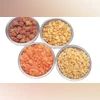 "Cabinet approves ₹11,440 cr mission to make India self-sufficient in pulses")

