Home / Economy / News / CEA rejects 'statistical discrepancy' criticism on Q1 growth numbers
CEA rejects 'statistical discrepancy' criticism on Q1 growth numbers
This indicates that the expenditure side has explained only 97.2 per cent of the income side. It does not mean that the 2.8 per cent that has yet to be explained does not exist, Nageswaran said
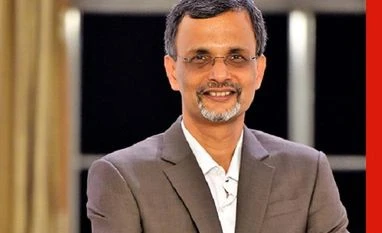
Chief Economic Advisor V Anantha Nageswaran has rejected criticism of 'statistical discrepancy' in the first quarter GDP data, saying when the same statistical authority reported the severest contraction in the first quarter of 2020, the naysayers had called it credible as it suited their narrative.
"In Q1 of 2023-24, the discrepancy of 2.8 per cent has a plus sign. This indicates that the expenditure side has explained only 97.2 per cent of the income side. It does not mean that the 2.8 per cent that has yet to be explained does not exist," Nageswaran said in an op-ed article.
"It exists and lends itself to being explained in subsequent quarters. Similarly, the preceding eight quarters have shown negative discrepancies. It means that the expenditure side has been over-explained and needs to be reconciled," the article co-authored by senior government economist Rajiv Mishra said.
Over a long period, the negatives and positives offset each other, it said, adding that between 1Q FY12 and 1Q FY24, the CAGR of real GDP (quarter-on-quarter) between the two approaches (income and expenditure) was 5.3 per cent annualised.
Therefore, it said, "the insinuation that GDP is exaggerated does not hold ground. The income side approach has not always been higher than the expenditure side. There has been a fair distribution of discrepancies since 2011-12 within a range of 6.4 per cent to (-) 4.8 per cent. The latest quarter discrepancy lies well within that. This is easy to verify".
The Chief Economic Advisor's (CEA) comments were reposted by Finance Minister Nirmala Sitharaman on the microblogging site X.
"When statistical authorities reported a GDP contraction of around 25 per cent in the first quarter of 2020-21it had reported one of the severest contractions in the history of Indian GDP data. That data suited naysayers...hence it was 'credible'," the finance minister said, quoting the CEA article.
The article was written in light of debates over India's economic performance and economist Ashoka Mody, a Princeton University professor, raising concerns regarding the country's GDP growth rate for the first quarter of the financial year 2023-24.
"Indian authorities are downplaying inconvenient macroeconomic facts so that they can celebrate seemingly flattering headline figures ahead of hosting the G20 summit. But, in covering up the growing struggles faced by the vast majority of Indians, they are playing a cynical and dangerous game," Mody said in an article posted by Project Syndicate titled 'India's Fake Growth Story'.
Mody has contended that the National Statistical Office (NSO) is utilising selective data, which, when examined more comprehensively, yields a significantly lower GDP growth rate than the 7.8 per cent announced by the government last month.
Growth, in fact, is low, inequalities are rising, and job scarcity remains acute, Mody said in the article.
Observing that the balance sheet problems of the Indian corporate and financial sectors in the last decade had hampered India's economic growth, Nageswaran said that is now history and banks are lending with credit growth in double digits. Companies are beginning to invest.
India's management of the Covid pandemic without excessive fiscal and monetary loosening, but with an emphasis on targeted relief and accent on public capital expenditure has provided a foundation of economic stability on which the edifice of sustained economic growth and higher living standards will rise in the coming years, Nageswaran said.

 "CEA rejects 'statistical discrepancy' criticism on Q1 growth numbers")


 Connect with us on WhatsApp