2 min read Last Updated : Mar 29 2024 | 12:23 PM IST
The Centre on Friday mandated that beginning April 1, all traders/wholesalers, retailers, big chain retailers and processors across states and Union Territories have to declare their stock position of wheat on the government portal effective April 1. The current wheat stock limit is expiring on March 31.
The union government said that the move is in a bid to manage the overall food situation and prevent hoarding and unscrupulous speculation. The declaration for rice stock by all categories of entities is already in place.
The order further stated that any entity which is not registered on the portal (https://evegoils.nic.in), has to register themselves and start disclosing the wheat and rice stock on every Friday.
The action comes amid a continued effort by the Food Department in the last year to manage the grain’s prices and availability.
In December 2023, the Centre had revised the limit for stocking wheat. For retailers, the revised limit for each retail outlet was cut from 10 MT to 5 MT. Big chain retailers were allowed to stock 5 MT for each of their outlets and 1,000 MT at all their depots. Earlier, it was 10 MT and 2000 MT, respectively.
The government had said that in case the stocks held by entities are higher than the prescribed limit, they shall have to bring the same to the prescribed stock limits within 30 days of issue of the notification.
Last month, the Ministry of Consumer Affairs, Food & Public Distribution had further lowered the stock limit of wheat to increase availability and moderate prices. For Traders/ Wholesalers, the limit was revised from 1000 metric tonnes (MT) to 500 MT. For Processors, from 5 MT for each outlet and 1000 MT at all their depots, it has been changed to 5 MT for each outlet and 500 MT at all their depots.
The latest move comes amid an accelerating food inflation rate. The data released by the National Statistical Office this month showed that although the consumer price index (CPI)-based inflation rate eased slightly to 5.09 per cent in February from 5.10 per cent in January, the easing was nullified by a rise in the food inflation rate to 8.7 per cent in February from 8.3 per cent in the preceding month.

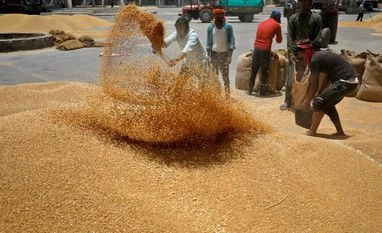 "Centre orders mandatory declaration of wheat stock position from April 1")


