Conflict to cooperation: US-India trade hits 'high watermark' under Biden

India-US trade ties have taken a positive turn under Biden administration
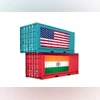
us india trade export import
Representative Picture
Asit Ranjan Mishra New Delhi
5 min read Last Updated : Sep 18 2024 | 10:28 PM IST
In the Business-20 event during India’s G20 presidency last year in August, Trade Minister Piyush Goyal, who donned the hat of the moderator, quizzed his counterpart, United States Trade Representative (USTR) Katherine Tai, on whether it would be fair to say that both sides now had the best relationship ever in their history.

“The quality of engagement, the huge respect, and the huge amount of confidence that was generated during the visit of Prime Minister Narendra Modi to the US and the bonding between President Biden and Modi. Does all of this reflect possibly the best time in terms of friendship and relationship?” Goyal said.
 
During that state visit in June last year, the United States and India announced resolutions on key trade issues, including the termination of six disputes (and later another pending dispute) at the World Trade Organization and India’s removal of tit-for-tat tariffs on certain US products such as chickpea, lentils, almond, walnut, apple, and boric acid. This almost made up for a mini trade deal that both sides could not agree upon during Modi’s visit to the US in 2019, during Donald Trump’s presidency.
 
“You are absolutely right. We are at a very high watermark,” Tai responded to Goyal.
 
Biden’s trade policy
 
Though President Joe Biden rode to power in 2021 criticising his predecessor, Donald Trump, for his “disastrous” trade policy, he did not show any inclination to reverse the Trump-era trade policies that dealt with friends and foes with the same sword. If anything, Biden further strengthened the trade sanctions against China that Trump had started. His focus on the interests of domestic workers and businesses, siding with the wave of anti-globalisation in the West and providing domestic subsidies to revive some industries like semiconductors, was seen by some experts as the “new” Washington Consensus.
 
Though Biden was part of the Obama administration that pushed for the Trans-Pacific Partnership trade deal that Trump rejected, as President he showed no willingness to revive it. With a clear policy not to negotiate trade deals where the US has to cede market access, the Biden administration floated the idea of the Indo-Pacific Economic Framework (IPEF) to strengthen economic cooperation among Indo-Pacific nations as a strategic counter to China’s growing clout in the region.
 
However, when it came to India, the Biden administration took a more conciliatory approach. Both sides revived the annual Trade Policy Forum talks after a gap of four years in 2021. India joined three out of the four pillars of the IPEF, though it stayed outside the negotiations of the trade pillar. While India’s decision to purchase discounted crude oil from Russia to ensure “energy security” created initial fissures in the relationship, the US has come to acknowledge India’s strategic and economic needs.
 
India’s merchandise bilateral trade with the US has increased by 50 per cent to $120 billion between FY21 and FY24. Eric Garcetti, US Ambassador to India, said in January this year that India-US bilateral trade, including both goods and services, had the potential to increase to $500 billion annually from the current $200 billion, riding on direct investments, joint ventures, partnerships, educational exchanges, and tourism.
 
India and the US trade and economic relations have also gained from what the US Treasury Secretary Janet Yellen calls America's “friendshoring” approach, which aims to diversify away from countries that present geopolitical and security risks to the US supply chain, such as China.
 
“We are proactively deepening economic integration with trusted trading partners like India. Our strategy will also create redundancies in our supply chain to mitigate over-concentration risks. And we are also addressing our reliance on manufacturers whose approaches clash with our human rights values,” Yellen said during her first visit to India in November 2022.
 
Ajay Srivastava, founder of Delhi-based think tank Global Trade Research Initiative, said more than the resolution of trade disputes, it was the tangible work on the ground during the Biden presidency that set it apart. “American companies have put dollars in India during the Biden administration, demonstrating the China Plus One policy in a very forceful way. It is during Biden’s time when Apple started manufacturing iPhones in India through Foxconn and American chipmaker Micron announced investment in India,” he said.


However, Srivastava said, the US support to India under the China Plus One strategy was selective. “When India tried to impose restrictions on laptop imports, the US vehemently opposed it. However, there is now bipartisan support for anti-China trade policy in the US, and India should leverage it further,” he added.
 
Both sides have pending issues to resolve. The Trump-era national security tariffs on India’s steel and aluminium imports are still prevalent. India’s request for the restoration of its Generalized System of Preferences status for duty-free exports of certain products is still pending. The long-standing negotiations for a totalisation agreement to prevent Indian techies in the US from paying double social security contributions also remain unresolved.
 
New watermarks?
 
Further responding to Goyal at the B20 event, Tai said her office, which works on the US-India trade relationship with its institutional memory, has told her that the working relationship between both trade ministers was certainly the best they have seen between India and the US.
 
This Saturday, Biden will travel to his hometown of Wilmington, Delaware, to host his final Quad summit with the leaders of India, Japan, and Australia, underscoring his personal commitment to strengthening US alliances in the Indo-Pacific region. As the US approaches its November presidential election, and  with  Biden having withdrawn from the  race, it remains to be seen whether the  newfound bonhomie on the trade and economic front will reach new watermarks under the next president.

One subscription. Two world-class reads.

Already subscribed? Log in

Subscribe to read the full story →
*Subscribe to Business Standard digital and get complimentary access to The New York Times

Smart Quarterly

₹900

3 Months

₹300/Month

SAVE 25%

Smart Essential

₹2,700

1 Year

₹225/Month

SAVE 46%
*Complimentary New York Times access for the 2nd year will be given after 12 months

Super Saver

₹3,900

2 Years

₹162/Month

Subscribe

Renews automatically, cancel anytime

Here’s what’s included in our digital subscription plans

Exclusive premium stories online

  • Over 30 premium stories daily, handpicked by our editors

Complimentary Access to The New York Times

  • News, Games, Cooking, Audio, Wirecutter & The Athletic

Business Standard Epaper

  • Digital replica of our daily newspaper — with options to read, save, and share

Curated Newsletters

  • Insights on markets, finance, politics, tech, and more delivered to your inbox

Market Analysis & Investment Insights

  • In-depth market analysis & insights with access to The Smart Investor

Archives

  • Repository of articles and publications dating back to 1997

Ad-free Reading

  • Uninterrupted reading experience with no advertisements

Seamless Access Across All Devices

  • Access Business Standard across devices — mobile, tablet, or PC, via web or app

Topics :Joe BidenNarendra ModiInternational trade

Next Story



