
Freight corridors driving equitable economic growth across India: Study
This suggests that the corridors are helping bridge the economic gap, offering a path towards more equitable economic growth across the country, research stated
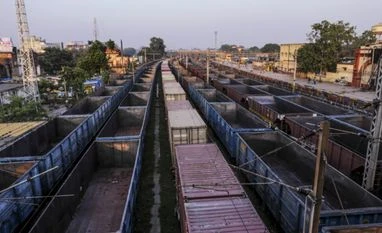 "Freight corridors driving equitable economic growth across India: Study")
WebinarsNew
Deep DiveNew
Explore Business Standard
This suggests that the corridors are helping bridge the economic gap, offering a path towards more equitable economic growth across the country, research stated
The dedicated freight corridors of the Indian Railways have had a social-equalising effect with states that have a lower per-capita GDP experiencing significant benefits, a study by the University of New South Wales, Australia, has revealed.
This suggests that the corridors are helping bridge the economic gap, offering a path towards more equitable economic growth across the country, it stated.
Though the study, published in Elsevier Journal, focused on the Western Dedicated Freight Corridor (WDFC) for the financial year 2019-20, experts say that overall, it benefits several industries and consumers, giving a big push to the Indian economy.
The study said the dedicated freight corridor gives financial benefits to all regions of the country. However, areas closer to it gain more due to a significant reduction in the travel cost, it said.
"The model finds a universal decrease in the cost of freighting, with GDP improvements being observed in regions with the greatest decreases in cost of freighting," the study said.
According to it, the reduction in freight cost and travel time due to the operationalisation of the dedicated freight corridor has helped reduce prices of the commodities by up to 0.5 per cent.
The dedicated freight corridor contributed to 2.94 per cent of the revenue growth realised by the Indian Railways between financial years 201819 and 202223, the study also found.
"The study found that the introduction of the DFC (dedicated freight corridor) contributed to overall national economic benefits with the greatest benefit being realised in the western regions closest to the DFC due to significant reductions in freight costs.
"However, regions further away also experienced economic advantages from decreased transportation costs," the Dedicated Freight Corridor Corporation of India Limited (DFCCIL) said.
About the model used in the study, the DFCCIL said the university created and used a computable general equilibrium model initiated by the Ministry of Road Transport and Highways to assess the effects of infrastructure development on regional and national economic growth.
"The findings indicated a 'social-equalising effect', with states having a lower per-capita GDP experiencing significant benefits. This suggests that the DFC is helping to bridge the economic gap, offering a path towards more equitable economic growth across the country," it said.
According to the DFCCIL, the study, overall, underscores the dedicated freight corridor's role in reducing freight costs nationwide, which in turn drives GDP growth and promotes equitable economic progress.
The 2,843-km dedicated freight corridor projects -- the Eastern Dedicated Freight Corridor (EDFC) and the WDFC -- pass through 56 districts in seven states and are 96.4 per cent complete.
The 1,337-km-long EDFC runs from Ludhiana to Sonnagar in Bihar and the 1,506-km-long WDFC connects Dadri in Uttar Pradesh with Mumbai.
While the EDFC is now 100 per cent complete and operational with feeder routes to different coal mines and thermal power plants, the WDFC is also 93.2 per cent complete with feeder routes serving various cement plants and the large ports of Mundra, Kandla, Pipavav, and Hazira in Gujarat.
"Currently, on an average, 325 trains currently run per day which is 60 per cent more than last year. The freight trains on DFC are speedier, heavier and safer," the DFCCIL said.
(Only the headline and picture of this report may have been reworked by the Business Standard staff; the rest of the content is auto-generated from a syndicated feed.)
First Published: Nov 01 2024 | 7:47 PM IST

