India needs to understand that global warming is a problem to be tackled but the country cannot sacrifice growth, Chief Economic Advisor (CEA) V Anantha Nageswaran said on Friday.
Delivering a virtual address at the Indo-Pacific Economic Conclave, organised by the Bengal Chamber of Commerce & Industry, he said: “In the short run, we need fossil fuels and more importantly we need our own resources to invest for green transition.”
He said economic growth and energy transition were not in contradiction to one another. “One complements the other.”
“So India has to continue to stand up for its right, to pursue economic growth in the coming years without jeopardising its climate goals, in which it is actually ahead of other countries,” the CEA said.
Speaking on the theme “India leads – towards 3rd largest economy”, the CEA noted several structural reforms that had been pursued by the government -- starting with financial inclusion, the Jan Dhan Yojana, Aadhaar, banking system cleanup, single indirect tax, Insolvency and Bankruptcy Code, Real Estate Regulation Act, continuous efforts at ease of doing business, decriminalising and removing outdated laws from the legal books and the expanded emphasis on physical and digital infrastructure.
“As a result, we have had 9.1 per cent growth in FY22 and 7.2 per cent in FY23, and we are poised to grow at 6.5 per cent per annum on average for this year and the remainder of the decade.”
On the reason behind the 6.5 per cent growth and not higher, Nageswaran pointed to global challenges.
The CEA said the global economy was going through a period of uncertainty, geopolitical fragmentation, and geo-economic inefficiencies.
“All these factors are currently underway whereas between 2003 and 2008, globalisation was in its heyday. And interest rates were low or being lowered globally.”
Now, the interest rates are either still rising or going to remain at a very high level. “That is why we are realistic about our growth prospects, which is still going to be one of the highest at 6.5 per cent in real terms and 11 per cent in nominal terms,” the CEA said.
Nageswaran also said the goal should be to not only become the third-largest economy in aggregate size but also to become, in per capita terms, a middle-income or upper middle-income country. “For that we need to make sure the aspiring middle class is not only able to get the kind of goods and services they need but they are also in a position to contribute.”
Rajeev Chandrasekhar, Union minister of state for entrepreneurship, skill development, electronics & technology, said that a new course was being charted every day and ambitions reimagined.
“In 2013, we were the fragile five and here we are among the top five economies of the world. And our Prime Minister has guaranteed that we will move from the top five to the top three in the next three years.”
Referring to the economic model of the past, the minister observed the major players were the public sector and the state and a handful of Indian companies, some of them very large and heavily diversified with a very small economic space available for young first-generation entrepreneurs and startups. “In that old model, the small remained small, the big grew bigger.”
“Today there is a very different economic model where a large part of economic activities and GDP is being created by young startups and young entrepreneurs who don’t see any limit to their ambitions. Today, the small need not remain small,” Chandrasekhar said, adding that there was no guarantee that the big would remain big and have “the too big to fail model” apply to them.
Ajay Seth, secretary, Department of Economic Affairs, Ministry of Finance, said in his virtual address that India had the potential to grow faster in the coming years. That means that it would create many opportunities for global investors.
“It also generates a huge positive virtuous cycle for higher growth, leading to higher savings, higher investments, more employment, and coming back to more growth. That virtuous cycle is now at play,” he said.

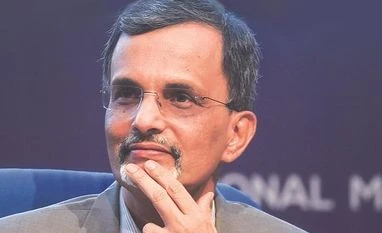 "Global warming a problem but can't sacrifice growth, says CEA Nageswaran")


