
Health experts alarmed by GST cut on beedis, demand uniform taxation
They warned that cheaper beedis could increase their use, particularly among poor and vulnerable communities, worsening India's tobacco-related health burden
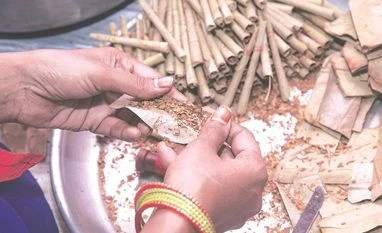 "Health experts alarmed by GST cut on beedis, demand uniform taxation")
Explore Business Standard

Associate Sponsors
Co-sponsor
They warned that cheaper beedis could increase their use, particularly among poor and vulnerable communities, worsening India's tobacco-related health burden
Health experts have raised serious concerns over the government's decision to reduce the Goods and Services Tax (GST) on beedis from 28 per cent to 18 per cent, while other tobacco products remain in the highest 40 per cent slab.
They warned that cheaper beedis could increase their use, particularly among poor and vulnerable communities, worsening India's tobacco-related health burden.
Beedis, the most commonly smoked tobacco product in India, are used by over 70 million adults, according to the Global Adult Tobacco Survey (GATS) India 2016-17.
Warning of public health risks, renowned oncologist and recipient of the Judy Wilenfield Award for Global Tobacco Control by WHO Partners, Dr Vishal Rao, said, "Beedis, widely consumed by vulnerable populations, are very harmful. This tax disparity risks making beedis more affordable, potentially increasing their use, leading to cancers and other diseases." Emphasising the broader policy risks, Dr Rao said this rate reduction would "subsidise death" for the poor as they are the most vulnerable.
"The government's decision to lower the GST on beedis to 18 per cent while setting other tobacco products at 40 per cent is a detrimental step for public health... Uniformly high taxation across all tobacco products is critical to deter consumption and protect public health," he said.
Highlighting the dangers of beedis, public health expert and Head of the Department of Rheumatology at AIIMS, Delhi, Dr Uma Kumar said evidence clearly shows that higher taxation helps prevent tobacco use by reducing its affordability.
"Beedis are no less harmful than cigarettes or smokeless tobacco. Their toxicity is well documented and consumption leads to life-threatening diseases such as cancers, respiratory illnesses, and heart conditions," she said.
Former director general of health services Dr Jagdish Prasad said no health or economic expert would support making a deadly product like beedi cheaper.
"Uneven tax policies that favour beedis over other tobacco products dangerously encourage their use, undermining decades of public health efforts. Bold, uniform and high taxes on all tobacco products are essential to curb consumption and protect our most vulnerable from these preventable health crises." Elaborating on beedi-related health hazards, Dr Pragya Shukla, Head of Clinical Oncology at Delhi State Cancer Institute, said, "Beedis, widely used across India's rural and low-income communities, deliver dangerously high levels of tar, nicotine and carbon monoxide, making them a significant driver of serious health issues such as oral and lung cancers, bladder cancers, cervical cancers, chronic respiratory diseases and cardiovascular conditions." "Higher and uniform taxation on all tobacco products, including beedis, is a proven public health strategy that reduces affordability, discourages uptake and lowers overall consumption. This approach helps protect vulnerable populations from devastating health consequences and reduces the immense economic burden on our healthcare system," she said.
Taxation is a proven tool for tobacco control, according to the World Health Organisation's Framework Convention on Tobacco Control (WHO FCTC), to which India is an early signatory.
Global studies show that a 10 per cent price increase can reduce tobacco consumption by 4-8 per cent in low and middle-income countries, particularly among the youth and lower-income groups sensitive to price changes.
The World Health Organisation (WHO) further recommends that at least 75 per cent of the retail price of tobacco products should be taxed to effectively reduce consumption.
Tobacco-related diseases impose a massive economic toll, estimated at over Rs 1.77 lakh crore annually in India, driven by medical costs and productivity losses. Poor households bear the heaviest burden and cheaper beedis could exacerbate this issue.
Health advocates are urging the government to reconsider the GST reduction, arguing that affordable access to a deadly product will derail tobacco control efforts, disproportionately affecting rural and low-income communities.
They have emphasised that uniform taxation aligned with global recommendations is essential for achieving sustainable development goals related to health, poverty reduction and social equity.
(Only the headline and picture of this report may have been reworked by the Business Standard staff; the rest of the content is auto-generated from a syndicated feed.)
First Published: Sep 07 2025 | 11:21 AM IST

