
Higher US tariffs on rival manufacturing hubs can benefit India: MAIT
About 60 countries will see tariffs higher than 10 per cent. The baseline 10 per cent tariff becomes effective on April 5 then any higher tariffs will come into effect on April 9
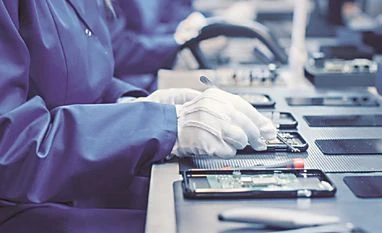 "Higher US tariffs on rival manufacturing hubs can benefit India: MAIT")
WebinarsNew
Deep DiveNew
Explore Business Standard
About 60 countries will see tariffs higher than 10 per cent. The baseline 10 per cent tariff becomes effective on April 5 then any higher tariffs will come into effect on April 9
The 26 per cent tariffs imposed by the US on India may create some headwinds, but relatively higher levies on competing nations may hand India an edge, tilting the scales in its favour and increasing its appeal in global supply chains, according to electronics and IT hardware industry body MAIT.
Manufacturing hubs such as China face a 54 per cent levy, Vietnam (46 per cent), and Thailand (36 per cent) as a result of the US' sweeping tariff actions, which have since spooked financial markets and trade partners.
India's $7-billion smartphone exports to the US may face some pressure due to evolving trade policies, but the real advantage lies in the comparative tariffs imposed on competing nations, Manufacturers Association for Information Technology (MAIT) said.
"While US trade barriers could theoretically dampen India's export volumes, the higher reciprocal tariffs on China and Vietnam create a relative advantage for Indian manufacturers. This discrepancy tilts the scales in India's favour, making its exports comparatively more appealing.
"Additionally, as global companies expand production in India to mitigate geopolitical risks, the country's export resilience strengthens. With competing nations facing steeper trade costs, global buyers may still favour Indian exports to maintain cost efficiency," it said.
India's smartphone shipments may not just sustain but even grow as supply chains recalibrate to avoid more heavily taxed alternatives, it added.
Under the proposed plan, the US will impose a 26 per cent tariff on imports from India, a rate determined by calculating the cumulative tariffs and non-monetary trade barriers that India applies to American goods.
About 60 countries will see tariffs higher than 10 per cent. The baseline 10 per cent tariff becomes effective on April 5 then any higher tariffs will come into effect on April 9.
India's competitors like China, Vietnam, and Thailand face significantly higher tariffs. This disparity creates a comparative advantage for Indian manufacturers, MAIT said, making their exports more appealing to global buyers seeking cost efficiency.
With rising tariffs on traditional export powerhouses, global firms may increasingly turn to India as a preferred alternative for new factories and supply chain realignment.
"Steep new US tariffs -- 46 per cent on Vietnam, 36 per cent on Thailand, and 32 per cent on Indonesia -- threaten to erode cost competitiveness in key electronics, telecom, and smartphone manufacturing hubs. This could trigger a supply chain shift, creating a strategic opening for India (26 per cent) as global brands plan to diversify production bases," the industry body said.
India stands to gain from the reconfiguration of global value chains -- especially in high-growth sectors like consumer electronics, telecom equipment, and IT hardware.
However, to fully capitalise on these opportunities, India must prioritise improving its ease of doing business, ensure policy stability, and invest heavily in logistics and infrastructure, MAIT said.
"If these conditions are met, India is well-positioned to emerge as a leading global manufacturing and export hub in the coming years," it noted.
From 2021-22 to 2023-24, the US was India's largest trading partner. The US accounts for about 18 per cent of India's total goods exports, 6.22 per cent in imports, and 10.73 per cent in bilateral trade.
With America, India had a trade surplus (the difference between imports and exports) of $35.32 billion in goods in 2023-24. This was $27.7 billion in 2022-23, $32.85 billion in 2021-22, $22.73 billion in 2020-21, and $17.26 billion in 2019-20.
In electronics, the trade between the two countries is captured under more than 470 HSN lines (product codes). India's electronics exports to the US stood at about $10 billion in FY24, while imports into India from the US were around $3.17 billion during the same period.
(Only the headline and picture of this report may have been reworked by the Business Standard staff; the rest of the content is auto-generated from a syndicated feed.)
First Published: Apr 04 2025 | 5:24 PM IST

