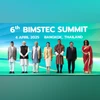
At the recently concluded 6th BIMSTEC (Bay of Bengal Initiative for Multi-Sectoral Technical and Economic Cooperation) Summit in Bangkok, the seven member states pledged to “swiftly” conclude the BIMSTEC Free Trade Area Agreement (FTA) and directed the Trade Negotiating Committee (TNC) and its working groups to finalise the constituent agreements “without further delay”.
However, the language evoked a sense of deja vu, with its striking resemblance to the Kathmandu Summit declaration five years ago in 2018, where leaders had similarly called for an “early conclusion” of the FTA, and raised questions about the seriousness of the member countries’ intent to move beyond statements and deliver concrete outcomes.
In fact, a BIMSTEC FTA has been in the making for over two decades, making it India’s longest negotiated trade deal.
State of play
BIMSTEC was established on June 6, 1997 with the signing of the Bangkok Declaration to explore economic cooperation on a sub-regional basis involving contiguous countries of South Asia and South East Asia grouped around the Bay of Bengal. Initially known as BIST-EC (Bangladesh-India-Sri Lanka-Thailand Economic Cooperation), the organisation is now known as BIMSTEC and comprises seven member states with the admission of Myanmar in December 1997, and Bhutan and Nepal in February 2004.
The framework agreement on the Bimstec Free Trade Area (FTA) was signed in 2004, but was never made operational.
The Bimstec trade negotiations are spread over the areas of tariff concessions on trade in goods, customs cooperation, services and investments. Movement of skilled professionals, in particular, is a sensitive issue in the services agreement.
The member countries established an institutional arrangement in the Trade Negotiating Committee (TNC) in 2004 for conducting negotiations to finalise these issues, as stipulated in the framework agreement. However, even after several rounds of negotiations, the members have not been able to reach a consensus over issues such as market access or a dispute settlement mechanism. This is in contrast to the FTA between Asean (Association of SouthEast Asian Nations) and India, which was proposed in 2003 and came into effect in 2010.
The share of India’s trade with BIMSTEC remains much lower than its potential for reasons such as poor connectivity and hurdles in trade facilitation leading to high trade costs, weak supply capabilities, especially in less developed countries such as Myanmar, Nepal and Bangladesh.
India’s exports to the BIMSTEC countries jumped 4.5 per cent in 2024 to $30.2 billion, while its imports from the same countries rose 14.4 per cent to $17.8 billion during the year.
Being a sector-driven grouping, cooperation within BIMSTEC had initially focused on six sectors in 1997 (trade, technology, energy, transport, tourism, and fisheries) and expanded in 2008 to incorporate agriculture, public health, poverty alleviation, counter-terrorism, environment, culture, people-to-people contact, and climate change. Subsequently, following steps to rationalize and reorganise sectors and sub-sectors, cooperation was given a makeover in 2021 with sectors and sub-sectors being led by respective member states. For example, while India leads security along with sub-sectors such as counter-terrorism and transnational crime, disaster management and energy, Bangladesh leads trade, investment and development along with blue economy sub-sector.
Highlighting BIMSTEC as a vital bridge between South Asia and South-East Asia, Prime Minister Narendra Modi at the recent Bangkok Summit underlined that the group had become an impactful platform for regional cooperation, coordination and progress. In this regard, he called for further strengthening the agenda and capacity of BIMSTEC. Calling for greater regional economic integration, Modi offered to establish the BIMSTEC Chamber of Commerce and to organize the BIMSTEC Business Summit every year in India.
At Bangkok, member countries signed the BIMSTEC Maritime Transport Agreement, which provides for national treatment and assistance to vessels, crew and cargo; mutual recognition of certificates/ documents; a joint shipping coordination committee; and a dispute settlement mechanism.
Trust deficit?
With progress in SAARC stalled due to ongoing hostility between India and Pakistan, BIMSTEC was seen as a more promising platform for regional integration — free from the influence of both Pakistan and China — neither of which are members of the grouping.
Nisha Taneja, professor at the Indian Council for Research on International Economic Relations (Icrier) said the core issue is the absence of a driving force to conclude a trade deal amongst BIMSTEC countries. “India has an FTA with ASEAN, Sri Lanka and it has unilaterally given tariff concessions to the least developed countries such as Bangladesh, Nepal and Bhutan. Thailand and Myanmar are part of the ASEAN. The nuances of the negotiations should be around the already signed FTAs that member countries have with India and come to a common ground to finalise it. So the contours of the negotiations should change,” she added.
Biswajit Dhar, a former professor at Jawaharlal Nehru University and now a distinguished professor at the Council for Social Development agreed, holding that the kind of political will that is required to do a FTA is missing among BIMSTEC countries. “The grouping never took off in the manner it was intended. There are only ad hoc areas of cooperation that were identified. All the countries in BIMSTEC have been in serious economic or political turmoil. Countries in crisis cannot think of signing an FTA because it involves give and take,” he said.
India also recently stopped transshipment facility for Bangladesh for exports to developed countries, though it clarified that transit for Nepal and Bhutan will not be impacted. The move is believed to follow after recent statements by chief adviser of Bangladesh Muhammad Yunus during his visit to China. Yunus had said that the North East region of India is landlocked, claiming Bangladesh to be the only “guardian of the ocean” for the region, while inviting Chinese investment.
Taneja said India stopping transshipment facility to Bangladesh has added a new dimension to regional trade.
Dhar said North East India could be a major beneficiary of a BIMSTEC FTA as all countries except Sri Lanka are close to India’s north east region. “With the relationship between India and Bangladesh beginning to sour, China will increasingly extend its footprint in Bangladesh, making a trade deal in BIMSTEC all the more difficult. Bangladesh and Sri Lanka have also expressed willingness to join RCEP. That again is an indication how big a role China is playing in the region. That is going to be another huge problem for a BIMSTEC trade deal,” he added.
Unless the member countries clearly see the benefits of free trade in the region and resolve their bilateral differences, a BIMSTEC FTA is likely to remain a distant dream.