India's ambitious energy stack takes shape, but faces legacy hurdles

The core of the India Energy Stack is to make energy pay for itself by a constant exchange of data between governments, the private sector, and consumers, but chronic problems of bad pricing remain

KAY CEE ENERGY
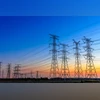
At the heart of this ambitious plan is to make energy pay for itself by a constant exchange of data between governments, the private sector, and consumers. | Representational
Subhomoy Bhattacharjee New Delhi
6 min read Last Updated : Jul 08 2025 | 6:21 PM IST
India’s power sector has not taken kindly to innovation, in so far as it relates to enforcing efficiency and reducing costs. Despite an impressive national grid, a growing renewable energy (RE) footprint, and plans to make India a hub for cross border electricity supply, chronic old problems of badly-set electricity prices leading to financial weakness in the power distribution companies refuse to go away.
 
This makes the power ministry's latest plan unveiled last week to set up an India Energy Stack (IES) an interesting proposition. At the heart of this ambitious plan is to make energy pay for itself by a constant exchange of data between governments, the private sector, and consumers. A statement from the ministry of power says a task force has been set up to establish the IES as a “a pioneering initiative aimed at creating a unified, secure, and interoperable digital infrastructure for India's energy sector”. Such a digitalisation of the electricity sector, according to the International Energy Agency, is a “powerful tool”.
 
For a country long used to government interference in business, this could be the biggest adoption of free enterprise if - and that could be a big 'if' - it succeeds. It could also finally rid the power sector of its endemic cycle of unpaid bills by consumers, losses for distribution companies (discoms), raised costs for generation companies, under-investment in the sector, and periodic bail-outs.
 
The plan, which got the go-ahead from the ministry of power on June 28, is fairly straightforward. Any citizen with a roof over his/her head can set up a solar panel to become a so-called 'prosumer' who can produce and sell surplus electricity. Energy utilities can then buy the surplus electricity, while the government will play the role of watchdog to make sure this presumed national market is not gamed. Underlying the electrical technology will be a financial technology stack built on a UPI-like platform so that sellers receive their payout as soon as someone switches on an electrical device.
 
“The key will be this financial application layer, which has to be affordable and reliable between the users," said Alok Kumar, former union secretary in the ministry of power. There are challenges, such as making a modern system like Tata Power in New Delhi speak the same language as legacy state government-run discoms, some of whom still which struggle to generate e-bills.
 
The other challenge is to figure out who pays for the setting up of the network. Kumar said this will not be difficult, since the power ministry has envisaged a period of proof-of-concept, or the Utility Intelligence Platform,  involving discoms of Mumbai, Gujarat and Delhi before a nationwide rollout. The success at the proof stage will make the companies, the states, and even the Centre willing to invest in the model, envisages Kumar.
 
The key difference between the Aadhaar-stack run UPI and the India Energy Stack is the lack of precedent for the former, which made it easier to course-correct. As banks graduated to putting their entire business online, they also learnt to integrate the UPI layers into their customer interface gradually. For instance, Jan Dhan, the countrywide seeding of bank accounts with Aadhaar, was rolled out before the scan-and-pay payment apps - which linked payments to those accounts - became commonplace, making the latter easy to engineer. Incidentally, Nandan Nilekani, who played a pioneering role in getting Aadhaar off the ground, is also the chief mentor of the IES Task Force.

A burdensome past

Given its history, it is no surprise that questions abound about another initiative seeking to pry open the gridlock that is India’s power sector. Since 2002, when the first of the power reform packages were announced, the Centre and state governments have spent over Rs 5.54 trillion on implementation efforts. Now, since February 2025, the Centre is again considering a fresh round of financial support for the mostly government-run discoms. Speaking at a meeting of discoms in February this year, Pankaj Agarwal, secretary (power), highlighted “the major concerns about financial health of public sector distribution utilities”, as per a a government release.
 
Acknowledging these challenges, Ram Sewak Sharma, chairman of the IES task force, said there will be plenty of discussions with the discoms about how to move forward.
 
Meanwhile, some European nations have begun to experiment with allowing prosumers to develop. In Bavaria, Germany, three power utilities have begun testing a pilot “to empower local communities by enabling them to share and consume their own locally-produced renewable energy”. IES, however, is far larger in scope. The time table is also stretched out to 2035, though the report of the Task Force is expected in a year.
 
The power ministry began some of the groundwork work on IES about four years ago, when it set up the National Smart Grid Mission in 2015. As the name suggests, it was meant to roll out intelligent power grids at a national level. This was to be complemented by the rollout of smart meters at the retail level to make electricity generation, transmission and distribution a viable business model.
 
This is most necessary since the peak power demand will be 388 GW in just another seven years (2032) from the current average of 220 GW. This is complicated by both engineering and financial challenges. Resources for electricity generation are unevenly distributed across the country, with the western and southern states having much larger capacity to generate renewable energy, both solar and wind. The eastern states have to pay larger wheeling charges to get that power, but they also have a lower financial capacity to do so. Thus, business models for the launch of various schemes and programmes under Smart Grids could actually deepen inequalities among the states.
 
IES could potentially cut through these knotty issues. If communities in Bihar or Jharkhand are able to generate solar locally and feed it into the grid, the costs for them and the states would also reduce. The missing element here is the cost of storage of power in batteries. The Union Cabinet had approved a Viability Gap Funding scheme for Battery Energy Storage Systems in September 2023. But the power ministry itself notes, against a target of 1000 Mwh in FY25, “none of the projects could achieve financial closure, so no expenditure was incurred under the scheme”. Yet the National Electricity Plan 2023 estimates that 236 GWh of battery storage will be required by FY32. A recent government decision to put more money into R&D efforts could help generate more business ideas for the sector as those for UPI did.
 
The financial engineering of IES will hopefully make the economics of these storage schemes viable. If not, the innovation-proof nature of the Indian power sector will continue to haunt the economy. 

One subscription. Two world-class reads.

Already subscribed? Log in

Subscribe to read the full story →
*Subscribe to Business Standard digital and get complimentary access to The New York Times

Smart Quarterly

₹900

3 Months

₹300/Month

SAVE 25%

Smart Essential

₹2,700

1 Year

₹225/Month

SAVE 46%
*Complimentary New York Times access for the 2nd year will be given after 12 months

Super Saver

₹3,900

2 Years

₹162/Month

Subscribe

Renews automatically, cancel anytime

Here’s what’s included in our digital subscription plans

Exclusive premium stories online

  • Over 30 premium stories daily, handpicked by our editors

Complimentary Access to The New York Times

  • News, Games, Cooking, Audio, Wirecutter & The Athletic

Business Standard Epaper

  • Digital replica of our daily newspaper — with options to read, save, and share

Curated Newsletters

  • Insights on markets, finance, politics, tech, and more delivered to your inbox

Market Analysis & Investment Insights

  • In-depth market analysis & insights with access to The Smart Investor

Archives

  • Repository of articles and publications dating back to 1997

Ad-free Reading

  • Uninterrupted reading experience with no advertisements

Seamless Access Across All Devices

  • Access Business Standard across devices — mobile, tablet, or PC, via web or app

Topics :India energy demandPower Sectorrenewable energyUPINandan Nilekani

Next Story




