Manmohan Singh was no free market ideologue: Montek Singh Ahluwalia

Manmohan Singh was not a free-market ideologue but a reformer guided by pragmatism, integrity, and faith in the state's developmental role, says Ahluwalia
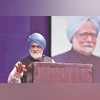
Montek Singh Ahluwalia
Delivering a lecture on “The Life and Legacy of Dr Manmohan Singh”, Former Deputy Chairman of the Planning Commission Montek Singh Ahluwalia underlined the former Prime Minister’s ability to persuade through logic and integrity rather than oratory. (Photo: PTI)
Asit Ranjan Mishra New Delhi
3 min read Last Updated : Nov 13 2025 | 11:10 PM IST

Don't want to miss the best from Business Standard?

Former Planning Commission Deputy Chairman Montek Singh Ahluwalia on Thursday said former Prime Minister Manmohan Singh was not a “free market ideologue” but a leader who balanced growth with equity, combining economic reform with deep personal integrity and a belief in the state’s developmental role. 
Delivering a lecture on “The Life and Legacy of Dr Manmohan Singh”, organised by the Prime Ministers Museum and Library as part of its Prime Ministers Lecture Series, Ahluwalia recalled Singh as “both a mentor and a role model”.
 
Ahluwalia said while Singh’s economic vision liberalised India’s economy, his approach was grounded in pragmatism rather than ideology. “He belonged to a generation that believed the state had an important role to play. He was not a free market fundamentalist. His own early experience of life made him powerfully aware that a great deal needed to be done to give the poor in rural areas a fair chance of realising their potential,” he said.
 
Referring to Singh’s Oxford doctoral thesis “India’s Export Performance and Prospects”, Ahluwalia said it had challenged the then-dominant “export pessimism” in developing countries. “His point was that India’s exports were being held back by bad domestic policies — inadequate support to the supply base and poor infrastructure — not by global discrimination,” he said.
 
Listing the steps taken during the 1991 reforms, Ahluwalia said that within a few months, reforms were carried out in several areas, liberalising industrial policy, reducing the public sector’s domain, easing foreign direct investment (FDI) rules, lowering import duties, reforming the capital market and financial sector, and allowing portfolio flows. “We did much more than what the International Monetary Fund (IMF) or World Bank would have insisted needs to be done — and that, I think, was the wisdom,” he said.
 
Ahluwalia underlined Singh’s ability to persuade through logic and integrity rather than oratory. “He was not a great orator, but a terrific interlocutor in serious, high-level discussions. He responded to criticism point by point, helping the country understand why change was necessary,” he said. Singh’s personal austerity, he added, “softened opposition” and made reforms politically acceptable.
 
“People knew he had no vested interest. Maybe he was wrong, but they believed he genuinely meant what he said,” Ahluwalia said. 
 
“In a democracy, you can’t expect consensus, but you can expect a softening of opposition — and his integrity made that possible.”
 
Ahluwalia described Singh’s leadership style as collaborative. “He would tell officers, ‘If you have a problem with what we’re doing, come and tell me. Don’t obstruct just because you don’t like the policy’. That’s how we built a team that worked,” he said.
 
Reflecting on Singh’s two terms as Prime Minister, Ahluwalia said UPA-I had “very substantial achievements” and maintained focus on growth despite political pressures. 
 
Among Singh’s lasting contributions, he cited the Indo-US nuclear deal and Aadhaar, adding that much of India’s digital infrastructure today rests on the foundation built under Manmohan Singh’s leadership. “The critical thing here was we brought in Nandan Nilekani,” he added.

One subscription. Two world-class reads.

Already subscribed? Log in

Subscribe to read the full story →
*Subscribe to Business Standard digital and get complimentary access to The New York Times

Smart Quarterly

₹900

3 Months

₹300/Month

SAVE 25%

Smart Essential

₹2,700

1 Year

₹225/Month

SAVE 46%
*Complimentary New York Times access for the 2nd year will be given after 12 months

Super Saver

₹3,900

2 Years

₹162/Month

Subscribe

Renews automatically, cancel anytime

Here’s what’s included in our digital subscription plans

Exclusive premium stories online

  • Over 30 premium stories daily, handpicked by our editors

Complimentary Access to The New York Times

  • News, Games, Cooking, Audio, Wirecutter & The Athletic

Business Standard Epaper

  • Digital replica of our daily newspaper — with options to read, save, and share

Curated Newsletters

  • Insights on markets, finance, politics, tech, and more delivered to your inbox

Market Analysis & Investment Insights

  • In-depth market analysis & insights with access to The Smart Investor

Archives

  • Repository of articles and publications dating back to 1997

Ad-free Reading

  • Uninterrupted reading experience with no advertisements

Seamless Access Across All Devices

  • Access Business Standard across devices — mobile, tablet, or PC, via web or app

Topics :Manmohan SinghEconomic reformsIndia Economic growth

Next Story


