To make progress in its Mission Raftaar, the Ministry of Railways this financial year is working on further removing speed caps for trains, renewing tracks, and installing fences along railway lines to keep off animals, according to officials in the know.
Two months after the Union Budget and following consultations with all railway zones, the ministry has finalised its performance targets for tracks and track-related works.
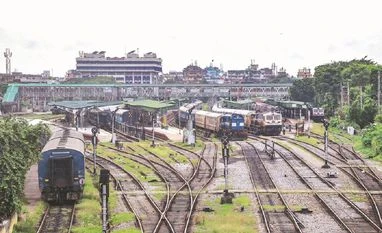
The transporter will renew tracks of 7,900 km in FY26. With the introduction of more Vande Bharat trains, which are running at below par average speeds despite being able to cover more than 160 km an hour, the railways is looking to make around 3,700 km fit for trains to speed along at more than 130 km an hour. In FY25, it was targeted that a section of 2,040 route km was to be equipped for 130 km an hour and in FY24 it was nearly 2,400 route km, marking an almost doubling of speed upgrade targets.
Moreover, the transporter, amid criticism over cattle-related accidents that Vande Bharat trains met with, and concern over the safety of livestock and passengers, has been installing safety fences along the tracks. This financial year, it is looking to install fences along 11,000 km, nearly double the previous year’s target.
The outcome of these targets is not publicly available.
Similarly, the ministry is targeting the removal of 208 permanent speed restrictions (PSRs) and relaxing around 80 PSRs. These often become factors in causing congestion and slowing operations. PSRs are typically imposed in areas approaching sharp curves or crossovers, or those with structures close to the tracks or dense pedestrian traffic in the area. While the railways has dealt with a lot of PSRs on account of level-crossing gates, the introduction of new trains with higher speeds like Vande Bharat have led to a net addition in PSRs.
Queries sent to the ministry remained unanswered till the time of going to press. In 2023, the ministry did a review of PSRs after it found that while it had started removing PSRs, the addition it did was three times the removal.
Under the mission, which has overshot its deadline, the ministry is aiming to increase the average speed of mail and express trains to 75 km an hour and freight trains to 50 km an hour. There are ecological factors involved, while areas prone to frequent cattle hits may also see these restrictions.
While the national transporter abruptly stopped releasing public monthly data on key metrics like train speeds last year, a report by a parliamentary standing committee found the average speed of freight trains had remained stagnant at about 25 km an hour over the past 11 years.

 "Railways ramps up speed mission with track upgrades, fencing drive")











