More than 74 million voters are set to cast their vote in Bihar’s Assembly elections on November 6 and 11. Yet the ripples of this democratic exercise stretch far beyond the state’s borders — from the textile mills of Tamil Nadu to the toy factories of Punjab — where machines have fallen silent and production lines slowed to a crawl.
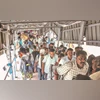
Across India’s industrial heartlands, a familiar absence is being felt. Between 30 and 60 per cent of the Bihari migrant workforce, the backbone of construction sites, manufacturing units, and logistics networks, has vanished homeward for an extended break — a leave that began with the start of Chhath Puja on October 25 and stretches until the final day of polling.
Industry sources told Business Standard that this outflow is unlike the routine disruptions of local or national elections. Workers are returning in unusually large numbers, disrupting construction, manufacturing, and transport sectors across key industrial states.
Take Tiruppur, Tamil Nadu’s knitwear capital, where roughly 250,000 workers hail from Bihar. “Our work has been affected; 50 to 60 per cent of workers from Bihar have gone back,” says M Muthurathinam, president of the Tiruppur Exporters and Manufacturers Association (TEAMA).
“This seems to be a do-or-die election for both political alliances (the ruling NDA and the Opposition Mahagathbandhan). The majority of the Bihari migrants have gone back; some even managed to get tickets from relatives to travel.”
Government data from the eShram portal lists Bihar among the top three states sending inter-state migrants, roughly 30 million workers in all. And Tiruppur is hardly alone. “Andhra Pradesh, Tamil Nadu, and Telangana are all seeing a dip in construction and infrastructure activity,” says a senior executive at a southern cement major. “We’re witnessing a huge fall in cement demand.”
Unemployment, poverty, and migration have become the defining issues of Bihar’s election. “They’ve never returned in such large numbers before,” notes Benoy Peter, executive director of the Centre for Migration and Inclusive Development (CMID). “It’s a battle for existence. Political parties have been pushing them to return and vote. Chhath added fuel to that decision.”
In Punjab, the impact has been equally bruising. The sports and toy industries, already reeling from 50 per cent US tariffs, have seen production nosedive. “The output is down by 35 to 40 per cent,” says Mukul Verma, director of Savi International in Jalandhar. “The majority of our labour comes from UP and Bihar. Some UP workers have returned after Diwali, but Biharis haven’t. Maybe after November 6, a few will trickle back.”
Sumit Sharma, former chair of the Sports and Toys Exporters Association, paints a concerning picture. Jalandhar and Ludhiana rely on sports goods, hand tools, and leather, all labour-intensive sectors. “With workers gone before Chhath, production has nearly come to a standstill. The output of these three industries combined has been hit by nearly ₹700-1,000 crore.”
He warns of a competitive slide. “We are losing out to competition from Pakistan and China. Winter is coming. If our leather industry doesn’t make products now, we won’t be able to deliver before the season starts.”
The exodus has spilled into Amritsar’s tourism sector too. Hotels and restaurants, just recovering from months of border tension, are now short-staffed during Guru Nanak Jayanti, one of their busiest periods. “The city is buzzing again, but we don’t have people to help,” says a hotelier in the walled city. “Tourists are complaining about inefficiency in big hotels.”
In Kashmir, too, the approaching peak tourism season has been shadowed by the same trend. “Normally, people return within a week after Chhath, but this time they’ve stayed back because of elections,” says Asad, a boat operator at Dal Lake. “We usually manage 10 rides a day, but now we can only do eight. The difference seems small, but it adds up, considering we won't get any work from December.”
Delhi’s construction sector is also feeling the pinch. “The shortage of workers has slowed projects across the city. With rising pollution, construction halts will only add to delays. In such cases, we have to pay from our pocket,” says a local builder.
Praveen Khandelwal, founder of the Confederation of All India Traders (CAIT), acknowledged the broader pattern. “There has been a noticeable movement of migrant workers from Bihar and eastern Uttar Pradesh returning home for elections and Chhath Puja. While this has led to a temporary manpower shortage in sectors like retail, logistics, and construction, the overall impact on business in Delhi remains manageable. Most traders anticipated this and adjusted schedules. Normalcy should return gradually once polling concludes,” he adds.