Manipur Election Results 2017: Advantage Congress, but BJP heading for a decisive presence

Okram Ibobi Singh's efforts to become the CM of Manipur for the fourth time are likely to be halted
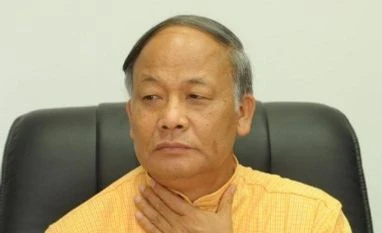
Okram Ibobi Singh
Okram Ibobi Singh
Aditi Phadnis New Delhi
Last Updated : Mar 11 2017 | 12:40 PM IST
On August 3, 2015, when the Narendra Modi-led National Democratic Alliance (NDA) government and the Nationalist Socialist Council of Nagaland-Isak Muivah (NSCN-IM) reached a peace accord, there was jubilation all round. Modi met Thuingaleng Muivah, the reclusive and legendary leader of what is now the longest-running insurgency in South Asia, and holding him solicitously by the arm, led him to the table to sign the documents: The symbolism of this was lost on no one. Few paid attention to the fine print in the agreement — which was never made public.

But this opacity has not hindered the prospects of the Bharatiya Janata Party (BJP). Results of the Assembly election suggest that the BJP, which brokered the accord, was heading for a decisive presence (for the first time in such large numbers) in Manipur. 

However, the state's chief minister and Congress leader, Okram Ibobi Singh, has managed to win in his constituency. His victory comes at the cost of civil rights activist Irom Sharmila whose votes stayed at under 100.

Pressure

Changing party loyalties is not new in North Eastern states but when Khumukcham Joykishan quit the BJP, resigned from his Assembly seat (he was one of the two MLAs who represented BJP for the first time in this state) and joined the Congress, he was under pressure. An umbrella organisation of civil society outfits had reportedly warned him that he needed to get his party to make public the terms of the agreement with NSCN-IM or quit. 

At the centre of the threat was the longstanding conflict between Nagas spread all across the North East and non-Nagas, the Hindu Meiteis, Kukis and other communities over the idea of Nagalim or Greater Nagaland. 

Fratricide and conflict between rival political outfits has long been the bane of politics in the North East. But after the NSCN-IM reached an accord with the Centre, the United Naga Council (UNC), its own front organisation, called for the details of the "surrender" to be made public and imposed an economic blockade. The issue was the Manipur government’s move of creating new districts bifurcating Naga-inhabited land. The hill areas, till recently, consisted of the five districts of Senapati, Tamenglong, Churachandpur, Chandel and Ukhrul. The four districts in the plains are Imphal East, Imphal West, Thoubal and Bishnupur. However, on December 9, the Manipur government created seven more districts, mostly out of the five hill districts. This triggered huge furore, particularly among some sections of the Nagas. The UNC stopped the movement of goods through two National Highways to the plains of the state — which is where the Hindu Meiteis, who are also the BJP’s primary voter base, are located.

Blockade affected Congress

Ibobi Singh obliquely supported the Nagas, indicating the stand-off between Nagas and non-Nagas was not his problem, but one created by the centre: "Since the central government is in peace talks with the NSCN-IM, they can easily put pressure on the United Naga Council to call off the economic blockade, which has caused much suffering here."

But the BJP has an alliance with the Naga People’s Front (NPF) with many in Manipur believing that while the NPF, riding on the back of the peace accord, would project itself in the Naga areas, the BJP would appeal to the non-Nagas and together the two would form a government.

Now, the BJP’s ambition has been realised. Ibobi Singh’s efforts to become the chief minister of Manipur for the fourth time are likely to be halted as the BJP appears set to make a serious bid to form a government. Much of the credit for this performance is due to BJP’s North East in-charge, General Secretary Ram Madhav, and to Himanta Biswa Sarma, who walked across to the BJP from the Congress as that party’s erstwhile principal strategist.

This much is clear, the BJP made impressive gains because Ibobi Singh’s efforts to drive a wedge between the hills and the plains did not work.

One subscription. Two world-class reads.

Already subscribed? Log in

Subscribe to read the full story →
*Subscribe to Business Standard digital and get complimentary access to The New York Times

Smart Quarterly

₹900

3 Months

₹300/Month

SAVE 25%

Smart Essential

₹2,700

1 Year

₹225/Month

SAVE 46%
*Complimentary New York Times access for the 2nd year will be given after 12 months

Super Saver

₹3,900

2 Years

₹162/Month

Subscribe

Renews automatically, cancel anytime

Here’s what’s included in our digital subscription plans

Exclusive premium stories online

  • Over 30 premium stories daily, handpicked by our editors

Complimentary Access to The New York Times

  • News, Games, Cooking, Audio, Wirecutter & The Athletic

Business Standard Epaper

  • Digital replica of our daily newspaper — with options to read, save, and share

Curated Newsletters

  • Insights on markets, finance, politics, tech, and more delivered to your inbox

Market Analysis & Investment Insights

  • In-depth market analysis & insights with access to The Smart Investor

Archives

  • Repository of articles and publications dating back to 1997

Ad-free Reading

  • Uninterrupted reading experience with no advertisements

Seamless Access Across All Devices

  • Access Business Standard across devices — mobile, tablet, or PC, via web or app

Next Story


