
Army chief justifies decision to replace 1971 war painting with new artwork
The painting on the 1971 war was removed from the Army chief's lounge in December and it was subsequently installed at the Manekshaw convention centre
 "Army chief justifies decision to replace 1971 war painting with new artwork")
WebinarsNew
Deep DiveNew
Explore Business Standard
The painting on the 1971 war was removed from the Army chief's lounge in December and it was subsequently installed at the Manekshaw convention centre
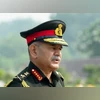
Army chief General Upendra Dwivedi on Monday justified replacing an iconic painting of Pakistan's surrender in the 1971 war at his office in Raisina Hills with a new artwork titled "Karam Kshetra".
The painting on the 1971 war was removed from the Army chief's lounge in December and it was subsequently installed at the Manekshaw convention centre.
The shifting of the historic painting had anguished many Army veterans and the decision came under some criticism.
"If you see the golden history of India -- it has three chapters. It has the British era, the Mughal era and the era before that. If we wish to connect that and the Army's vision, symbolism becomes important," Gen. Dwivedi said.
The new painting, "Karam Kshetra", meaning "Field of Deeds", is a creation of Lieutenant Colonel Thomas Jacob of the 28 Madras regiment.
It portrays the Army as a guardian of "Dharma" that protects the nation's values and reflects its evolution into a technologically-advanced integrated force, according to the Army.
It features the snow-capped mountains around the Pangong Tso lake in eastern Ladakh, Krishna's chariot and Chanakya that represent strategic wisdom.
The Army chief suggested that the new painting was made considering the current realities as he mentioned about the re-balancing of troops in view of challenges coming from the northern front.
Gen. Dwivedi said the painting was created by Lt Col Jacob, who belongs to the younger generation in the force.
"It is also being said that there is a semi-clad Brahmin standing at the centre on the banks of Pangong Tso," he said.
If Indians do not know Chanakya, they need to refer back to their civilisational approach, he said.
The Army chief said the new painting symbolises the past, the present and the future.
"If I have to connect the past, present and future, it symbolises that," he said.
The Army chief has two lounges and the surrender painting is at the lounge at Manekshaw Centre, Gen. Dwivedi said.
(Only the headline and picture of this report may have been reworked by the Business Standard staff; the rest of the content is auto-generated from a syndicated feed.)
First Published: Jan 13 2025 | 10:11 PM IST

