A Danish court announced on Thursday that it had rejected India's request to extradite a Danish citizen, Niels Holck, wanted in connection with a 1995 weapons smuggling case, citing potential violations of human rights, news agency Reuters reported.
India has long pursued the extradition of Holck, who is suspected of supplying approximately four tonnes of weapons to a rebel group in West Bengal, to stand trial.
The court reportedly determined that extraditing Holck to India would contravene Denmark's extradition laws, as there is a significant risk that he could face treatment in violation of the European Convention on Human Rights.
Public prosecutor Anders Rechendorff, who had recommended Holck's extradition to India last year, told Reuters that it was still undecided whether the ruling would be appealed.
Meanwhile, speaking to Reuters, defence lawyer Jonas Christoffersen said that the guarantees provided by India are not valid. Pointing out that six years of negotiations had taken place between the Danish public prosecutor and India over the conditions, Christoffersen said, "Now the court says that his (Niels Holck's) safety can't be guaranteed."
Holck had previously admitted in a Danish court to being aboard a Russian cargo plane with six others in December 1995, smuggling weapons into West Bengal. At that time, he was known by the alias Kim Davy.
According to Christoffersen, the weapons were intended for individuals associated with Ananda Marga, a rebel movement that, Holck claimed, required arms to defend against the soldiers of the then-ruling communist party in West Bengal.
However, the weapons ended up in an unintended location and were subsequently discovered by Indian authorities. The entire crew, except for Holck, who managed to escape to Nepal and later returned to Denmark in 1996, was prosecuted and imprisoned in India.
The Danish trial did not address Holck's guilt or innocence but focused on whether the criteria under the extradition law were met, according to the Danish public prosecutor.


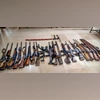 "Bengal arms drop: Denmark refuses to extradite accused Niels Holck to India")


