
China says border issue with India does not represent entirety of ties
India has been maintaining that its ties with China cannot be normal unless there is peace in the border areas
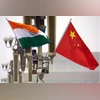 "China says border issue with India does not represent entirety of ties")
Explore Business Standard

Associate Sponsors
Co-sponsor
India has been maintaining that its ties with China cannot be normal unless there is peace in the border areas
China on Wednesday said the Sino-India boundary issue does not represent the entirety of the bilateral ties and called for enhancing mutual trust between the two countries to avoid misunderstanding and misjudgement.
India has been maintaining that its ties with China cannot be normal unless there is peace in the border areas.
Bilateral ties nosedived significantly following the fierce clash in the Galwan Valley in June 2020 that marked the most serious military conflict between the two sides in more than four decades.
Responding to questions on External Affairs Minister S Jaishankar's remarks this week that the amassing of troops along the Line of Actual Control (LAC) has "not served either of us well", Chinese Foreign Ministry spokesperson Wang Wenbin said, the boundary issue should be placed appropriately in the bilateral ties.
China has stressed multiple times that the boundary question does not represent the entirety of the China-India relations which should be placed appropriately in the bilateral relations and managed properly, Wang said.
While responding to a query from a Chinese diplomat at the 'Express Adda' on Monday, Jaishankar said, I think it is in our common interest that we should not have that many forces on the Line of Actual Control (LAC).
"It is in our common interest that we should observe the agreements that we have signed. And I believe that it is not just in our common interest and it is in China's interest as well.
This tension that we have seen for the last four years has not served either of us well, Jaishankar said.
Wang, in his reply, said both China and India believe an early settlement of the situation on the China-India border serves the common interest of the two sides.
We hope that the two sides will follow the common understanding between the leaders and the spirit of the relevant agreements maintaining communication through diplomatic and military channels and find a solution to the relevant border issues that can be accepted by the two sides at an early date, he said.
China has stressed multiple times that the boundary question does not represent the entirety of the China-India relations, which should be placed appropriately in the bilateral relations and managed properly, he said.
We hope that India will work in the same direction with us and approach the bilateral relations from a strategic height and long-term perspective, he said.
Both countries should enhance mutual trust and avoid misunderstanding and misjudgement, he said. We should handle differences properly to develop our bilateral relations on a sound and steady track.
When pointed out that Jaishankar's comments referred to the resolution of the present standoff in eastern Ladakh where the two countries deployed thousands of troops, while China referred to the overall boundary issue, Wang said, The two things in nature are the same.
We hope that India will work with us and follow the common understandings reached by the two leaders and the spirit of the agreements and maintain communication to find a solution to the border issue at an early date, he said.
The Indian and Chinese troops are locked in a standoff in certain friction points in eastern Ladakh even as the two sides completed disengagement from several areas following extensive diplomatic and military talks.
The eastern Ladakh border standoff erupted on May 5, 2020, following a violent clash in the Pangong Tso (lake) area. The eastern Ladakh standoff has resulted in a freeze of bilateral ties on all fronts except trade.
The two sides have so far held 21 rounds of corps commanders-level talks to resolve the standoff.
According to the Chinese military, the two sides so far agreed to disengage from four points, namely the Galwan Valley, the Pangong Lake, Hot Springs, and Jianan Daban (Gogra).
India is pressing the PLA to disengage from the Depsang and Demchok, maintaining that there cannot be restoration of normalcy in its relations with China as long as the state of the borders remains abnormal.
(Only the headline and picture of this report may have been reworked by the Business Standard staff; the rest of the content is auto-generated from a syndicated feed.)
First Published: Mar 13 2024 | 5:05 PM IST

