
India-China ties moving in positive direction, more to be done: Jaishankar
Following a series of diplomatic and military talks, the two sides withdrew their troops from several friction along the Line of Actual Control (LAC) in eastern Ladakh
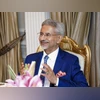 "India-China ties moving in positive direction, more to be done: Jaishankar")
Explore Business Standard

Associate Sponsors
Co-sponsor
Following a series of diplomatic and military talks, the two sides withdrew their troops from several friction along the Line of Actual Control (LAC) in eastern Ladakh
India and China are moving towards a "positive direction" in their ties and work needs to be done to normalise the relationship, External Affairs Minister S Jaishankar said on Wednesday.
"I think we are moving in a positive direction," he said.
India-China relations plunged to their lowest point since the 1962 war following the Galwan Valley clashes.
Following a series of diplomatic and military talks, the two sides withdrew their troops from several friction along the Line of Actual Control (LAC) in eastern Ladakh.
In October last, the two sides firmed up a disengagement pact for Depsang and Demchok, the last two friction points in eastern Ladakh.
"It's obviously better than the last time I was here. I think the disengagement, particularly the Depsang-Demchok was important," he said at the News 18 Rising Bharat Summit.
In October last, the two sides firmed up a disengagement pact for Depsang and Demchok, the last two friction points in eastern Ladakh.
Days after the agreement was finalised, Prime Minister Narendra Modi and Chinese President Xi Jinping held talks in Kazan and took a number of decisions to improve the ties.
Jaishankar suggested that issues on the border remained to some extent because of the force build up over a period of years.
"But there were many other things which also happened during this period some of it was a collateral of the situation; some of it was actually a carryover from the Covid era. For example, our direct flights stopped during Covid, they were not resumed," he said.
"The Kailash Mansarovar Yatra stopped during Covid. It did not again resume. I think there is work to be done. We are at it," he said.
"We are sort of trying to see whether lot of this post-Covid and parallel to the border tension, the combination of these issues -- how much we can progress on this," Jaishankar added.
The external affairs minister said both sides are looking into these issues.
"We are looking at it because at the end of the day we have always maintained that the situation, which we saw between 2020 and 2024, was not in the interest of either country," he said.
"It was not in the interest of our relationship. And I think there is a recognition of that now," he added.
Last month, India and China explored ways to rebuild ties and agreed to initiate efforts to promote people-to-people exchanges, including arrangements for resumption of direct flights and resume Kailash Manasarovar Yatra this year.
In December NSA Ajit Doval travelled to Beijing and held talks with Foreign Minister Wang under the framework of Special Representatives (SR) dialogue on the boundary question.
In January, Foreign Secretary Vikram Misri visited Beijing and held talks with his Chinese counterpart Sun Weidong.
First Published: Apr 09 2025 | 1:27 PM IST


