
India to be global hub for renewable energy in next 30 years: US Ambassador
The outgoing ambassador was speaking at the South Asia Women in Energy leadership summit hosted by the US-India Strategic Partnership Forum (USISPF)
 "India to be global hub for renewable energy in next 30 years: US Ambassador")
Explore Business Standard

Associate Sponsors
Co-sponsor
The outgoing ambassador was speaking at the South Asia Women in Energy leadership summit hosted by the US-India Strategic Partnership Forum (USISPF)
Like the resilience of a palm tree that grows notwithstanding the "strongest storm" and "biggest wind", the India-US relationship will continue to thrive and benefit the world, US Ambassador Eric Garcetti said on Monday.
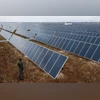
In an address at an event, the envoy specifically lauded India's "bold goals" for renewable energy and said it will emerge as the "shop floor" globally in the sector in the next 30 years.
"India's ambitious targets and policies are making it a leader in solar and wind capacity, not just for this country, but to be able to manufacture at cost for the world -- the solar panels that we need, the electrolyzes that we want, the batteries that are critical," he said.
"India will, mark my words, in the next 30 years, be the shop floor for the renewable energy revolution," he said.
The outgoing ambassador was speaking at the South Asia Women in Energy leadership summit hosted by the US-India Strategic Partnership Forum (USISPF).
The ambassador narrated an episode of a hotel in Kerala requesting him to plant a coconut palm sapling at the end of his stay.
"And I said something, I said how long will it be till the coconuts come from this tree and they said, well, it's about eight years." In the larger context of India-US ties, he said: "May we each day, plant that coconut, may we each day, find a way to make things a little bit better." "I'm confident that the US-India relationship is just like that planting, something that will continue to grow, something that will be resilient as we know the palm tree, the strongest storm can't knock it down, the biggest wind can't take it away.
"But that it will continue to provide not just for itself, but for the world around it, and that is our mission," he said.
Garcetti suggested he would deliver speeches covering "four Ps -- peace, prosperity, planet and people" on India-US relations before leaving New Delhi and the first one on Monday was focused on the planet.
The US ambassador is set to demit office ahead of the inauguration of the second tenure of Donald Trump as the US President on January 20 to facilitate the new administration to pick its choice.
"The central government here has set bold goals and I'm seeing India pour more into renewable energy than nearly any other country on the face of the earth. But it will come down to community work that we do," he said.
The ambassador also listed various initiatives between India and the US in the clean energy sector and said the partnership will continue to grow.
There have been apprehensions that the Donald Trump administration may not adequately focus on the clean energy sector.
"So don't worry, America's going to be your partner no matter what; and we are committed, as we've shown, with billions of dollars of green investment flowing into solar and wind projects, electric vehicle production, energy storage solutions," Garcetti said.
He also highlighted various initiatives undertaken by India and the US in the clean energy sector and specifically mentioned the Renewable Energy Technology Action Platform (RETAP).
In his remarks, the envoy also spoke about the inherent strength of democracy as against autocracies like China.
"I went to China once and I was talking about planting a million trees in Los Angeles, and I was meeting with the mayor who said, oh I planted four million last year," he said.
"And of course, 'cause, he said, these are where the trees are gonna go if you need to move the house, there's no democracy involved, no protest, no anything." In that context, he explained various difficulties in doing work in democracies like India and the United States.
"But I would never have it any other way because the flip side is when you have a democracy, you can engage people in the change around them. You can listen to the solutions they might have, you can contest and then kind of synthesise the best way to move forward," he said.
(Only the headline and picture of this report may have been reworked by the Business Standard staff; the rest of the content is auto-generated from a syndicated feed.)
First Published: Dec 16 2024 | 6:51 PM IST

