More than five decades after it was signed, the Panchsheel Agreement between India and China is back in the spotlight. As global leaders convene in China for the Shanghai Cooperation Organisation (SCO) summit, Chinese President Xi Jinping invoked the pact, referring to it as “the five principles of peaceful coexistence.”
The agreement was framed on the principles of non-aggression and non-interference. It was designed to promote peaceful coexistence not only between India and China but also among nations. It is now being hailed as a guiding framework to strengthen ties in a world grappling with uncertainties and growing geopolitical frictions.
What’s the latest?
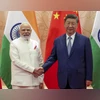
Chinese President Xi Jinping on Sunday highlighted the importance of Panchsheel agreement during his meeting with Indian Prime Minister Narendra Modi on the sidelines of the ongoing SCO summit in Tianjin, China.
Asking to uphold the Panchsheel treaty, Xi said that the five principles promoting peace and coexistence must be “cherished and promoted”. Here’s a look at what is Panchsheel agreement and what it entails.
Why does it matter?
Amid strained relations with the United States following the imposition of 50 per cent tariffs, India is reassessing its engagement with neighbouring countries, including China, while also seeking new markets. Ties between New Delhi and Beijing have remained tense since the 2020 Galwan Valley clashes. PM Modi’s ongoing visit to China, the first in seven years and since the border clashes, signals an attempt to revive bilateral trade and cooperation.
What is Panchsheel?
Panchsheel, or the five principles of peaceful co-existence, were first formally termed in the Agreement on Trade and Intercourse between the Tibet region of China and India, signed in 1954. The five pillars of the principle include:
- Respect for each other’s territorial integrity and sovereignty
- Non-aggression
- Non-interference
- Equality and mutual benefit
- Peaceful co-existence
During the visit of Chinese Premier Zhou Enlai to India, he and then Prime Minister Jawaharlal Nehru agreed that the Panchsheel framework is important not only for India-China relations, but also for their relations with all other countries.
What’s the need for Panchsheel?
The treaty was aimed at building a foundation that would promote peace and security in the world. In 1954, Panchsheel gave substance to the voice of newly-established countries who were seeking the space to consolidate their hard won independence, as it provided an alternative ideology dedicated to peace and development of all as the basis for international interaction, whether bilateral or multilateral.
At that time, the two Prime Ministers also expressed the hope in the Joint Statement that the adoption of Panchsheel “…will also help in creating an area of peace which as circumstances permit can be enlarged thus lessening the chances of war and strengthening the cause of peace all over the world.”
Panchsheel in modern day
Almost fifty years later, the chord that was struck in 1954 has become more important as the ties between major global powers have come under strain. Xi’s call for upholding the Panchsheel pact signals a need for stepping up efforts to end present-day conflicts and expand the influence of the region amid its tussle with the West.
However, this isn’t the first time that Xi has highlighted the relevance of Panchsheel principles. In June this year, Xi invoked the Panchsheel principles and sought to juxtapose them with his new concept of Global Security Initiative envisaging a shared future for mankind.
“The Five Principles of Peaceful Coexistence answered the call of the times, and its initiation was an inevitable historic development. The Chinese leadership in the past specified the Five Principles in their entirety for the first time,” Xi said. “These principles have set a historic benchmark for international relations and international rule of law,” Xi said, highlighting their relevance to ending modern-day conflicts.
What’s next in bilateral ties?
During his meeting with Modi on Sunday, Xi seeked to strengthen strategic communication and deepen mutual trust between the two countries. He also discussed expanding exchanges and cooperation to achieve mutual benefit, accommodating each other’s concerns and getting along in peace and harmony.
“The two Asian neighbours should combine their strength to maintain peace and tranquility in their border regions, and should not allow the boundary question to define the overall China-India relations,” Xi said according to a release by China’s foreign ministry.
India and China partners, not rivals
PM Modi told Xi that India and China are partners, not rivals. Noting that the consensus between the two countries far outweighs their disagreement, Modi said India is ready to view and develop bilateral ties from a long-term perspective.
Given the great uncertainties in the world economy, it is vital for India and China to strengthen cooperation as important economies of the world, he added. Modi also explained that the bilateral relationship has been back on a positive trajectory, peace and stability in the border regions have been maintained, and direct flights are about to be resumed.

 "Xi invokes Panchsheel pact in talks with Modi: What is it, why it matters?")


 Connect with us on WhatsApp