Home / Finance / News / No proposal to levy charges on UPI transactions, says RBI governor
No proposal to levy charges on UPI transactions, says RBI governor
RBI governor Sanjay Malhotra said UPI transactions will remain free, while the central bank tests an AI-driven fraud detection system to curb risks in digital payments
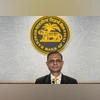
Mumbai: Reserve Bank of India Governor Sanjay Malhotra during a press conference in Mumbai, Maharashtra, Wednesday, Oct. 1, 2025. Sanjay Malhotra delivered Monetary Policy Statement.(Photo:PTI)
There is no proposal to levy any charge on Unified Payments Interface (UPI) transactions, Reserve Bank of India (RBI) governor Sanjay Malhotra said on Wednesday.
Currently, UPI transactions remain free for all users.
The digital payments industry has been seeking a nominal merchant discount rate (MDR) on UPI transactions made to large merchants, under an arrangement where users bear no cost for such payments.
In June, the Finance Ministry clarified that it did not plan to introduce an MDR on UPI payments.
MDR refers to a fee that merchants pay banks or companies processing payments for executing a transaction.
Combating payments fraud
Separately, Malhotra said the RBI Innovation Hub (RBIH) is developing the Digital Payments Interface Platform (DPIP) to flag risky transactions to users and banks before they are executed.
DPIP is currently being tested as the regulator aims to reduce fraudulent transactions in the digital payments ecosystem.
It is designed to collect information from available data sources such as mule accounts, telecom networks and geographies from where risky transactions typically emerge.
An artificial intelligence (AI) system is being trained on this data to alert users and banks of potentially fraudulent payments.
“Our constant effort is to stop fraudulent transactions from one account to another. We are developing software that is still under testing and not fully implemented. Once complete, it will enable us to gather all necessary information and warn users of potentially risky transactions in advance,” Malhotra explained.
“An entity is being set up to run this (DPIP). This system will alert before a transaction, saying that it is risky. Based on that alert, the customer or bank will have to take a call,” said T Rabi Sankar, deputy governor, RBI.
Last year, the RBI had proposed to set up DPIP to mitigate payment frauds and protect customers from associated risks.
“We expect this to have a significant impact in reducing the number of frauds we see in the system. By no means am I saying that the number of frauds is high. They are well under control if you look at frauds per transaction in UPI and other modes,” Sankar added.

 "No proposal to levy charges on UPI transactions, says RBI governor")


 Connect with us on WhatsApp