India's Finance Minister Nirmala Sitharaman will present the Union Budget on February 1, 2025, a day keenly awaited by taxpayers across the country. Many tune in specifically for the segment on income tax, eager to see if any changes are announced to provide relief for the common man.
This year, speculation revolves around whether tax slabs will be altered or new relief measures introduced. Business Standard spoke to experts to understand their views on what the government may announce.
Budget 2025: Expected changes
The Central Board of Direct Taxes (CBDT) has undertaken extensive preparatory work, focusing on reviewing and simplifying tax laws. This has raised expectations of reforms that could streamline processes and build taxpayer trust.
“While a complete overhaul of the Income Tax Act appears unlikely in this Budget, measures to simplify compliance and resolve disputes faster could be introduced,” said Ashish Agrawal, Partner at Dhruva Advisors. “Disposal rates at the Faceless CIT(Appeals) levels, for instance, have been slow over the past 3 to 4 years. Addressing this would improve the ease of doing business.”
Agrawal also suggested the government simplify Tax Deducted at Source (TDS) and Tax Collected at Source (TCS) provisions. “The complexity of multiple rates and sections should be reduced. Additionally, extending the 15% concessional corporate tax rate under the Make-in-India initiative, currently set to expire on 31 March 2024, by another five years could drive private investment, employment, and exports.”
On foreign taxpayers, Agrawal proposed direct tax payments and refund claims via overseas bank accounts on the e-filing portal to remove the need for Indian bank accounts.
Proposals for senior citizens
Sudhir Kaushik, CEO of Taxspanner, suggested lowering the age for senior citizens’ tax filing exemptions from 75 to 70 years. He also emphasised ensuring mandatory filers comply with tax rules.
In contrast, CA Anand Bathiya, President of the Bombay Chartered Accountants' Society, expressed limited expectations for policy-level changes. “The focus will likely remain on procedural tweaks and simplifications rather than substantial overhauls. Budgets are generally not used for major policy shifts,” said Bathiya.
Budget 2025 expectations: Tax reforms
Shefali Mundra, a tax expert with ClearTax, shared potential reforms she expects in the Budget:
Section 80D deductions: Increasing limits to Rs 50,000 for individuals and Rs 1,00,000 for senior citizens to encourage health insurance uptake.
Home loan interest deductions: Raising limits under Section 24(b) from Rs 2 lakh to Rs 3 lakh to promote real estate investments.
Section 80C limit revision: Updating the Rs 1.5 lakh cap set in 2014 to encourage investment in tax-saving instruments like Public Provident Fund (PPF) and tax-saving fixed deposits.
Corporate tax rate extension: Continuing the 15% concessional tax rate for new manufacturing units beyond March 2024 to support Make-in-India initiatives.
R&D incentives: Introducing production-linked incentives for research and development, focusing on metrics like increased turnover or capital investment.
Agrawal also called for higher exemption limits for senior citizens and suggested reducing individual and Limited Liability Partnership (LLP) tax rates to 25%, in line with corporate rates.
Budget 2025: The debate over tax slabs
There is considerable debate about whether tax slabs should be revised.
“Revisions to tax slabs are overdue. Increasing the tax-free threshold to Rs 10 lakh and introducing progressive rates—10% for Rs 10–20 lakh, 20% for Rs 20–30 lakh, and 30% for above Rs 30 lakh—could address reduced disposable incomes caused by inflation and high taxes,” said Agrawal.
Kaushik, however, stressed the importance of stability. “Keeping tax slabs and rules stable allows taxpayers to plan long-term without disruption. Frequent changes create uncertainty and affect financial strategies,” he said.
Bathiya noted that high personal taxation frameworks could be eased with adjustments. “Putting more money in the hands of the middle class would drive consumption and enhance economic growth,” he said.
Mundra expects Sitharaman to raise the basic tax exemption limit is expected to be raised from Rs 3 lakh to Rs 5 lakh. She explains how the tax calculation for an individual earning Rs 15 lakh under both the existing and proposed tax exemption limits with a standard deduction 75,000:
Existing tax slabs
Up to Rs 3 lakh: Nil
Rs 3–7 lakh: 5% = Rs 20,000
Rs 7–10 lakh: 10% = Rs 30,000
Rs 10–12 lakh: 15% = Rs 30,000
Rs 12–15 lakh: 20% = Rs 60,000
Total tax payable: Rs 1,40,000
Proposed tax slabs
Up to Rs 5 lakh: Nil
Rs 5–7 lakh: 5% = Rs 10,000
Rs 7–10 lakh: 10% = Rs 30,000
Rs 10–12 lakh: 15% = Rs 30,000
Rs 12–15 lakh: 20% = Rs 60,000
Total tax payable: Rs 1,30,000
The Budget’s tax measures will be closely scrutinised, as taxpayers and experts alike anticipate changes that could impact their financial strategies and the economy at large.

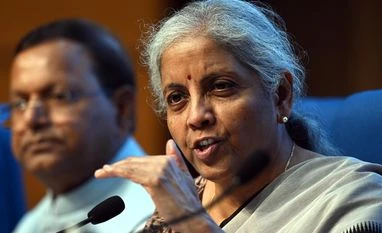 "Budget 2025: Will middle-class gain relief with tax slabs from Rs 5 lakh?")


