Sign agreement locker agreement promptly, buy cover for valuables

Customers may face service interruption if they don't sign agreement after multiple deadline extensions
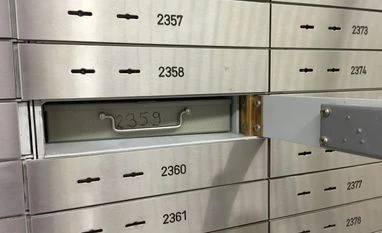
Bank Lockers New Rules
Banks typically require customers to open a fixed deposit (FD) when availing of a locker | File image
Karthik Jerome New Delhi
4 min read Last Updated : Jun 24 2025 | 4:33 PM IST
Customers who have not yet signed the revised locker agreement with their banks should do so promptly. They risk losing access to their lockers if they delay further.
 
The Reserve Bank of India (RBI) had directed banks in August 2021 to sign updated locker agreements with customers by January 1, 2023. The deadline was extended twice: first to December 31, 2023, and then to March 31, 2024. Some banks have now reportedly sought a further extension until December 2025.
 
Risk of access suspension
 
Customers may face service interruption. “The operation of the locker could be paused until the agreement is signed,” says Adhil Shetty, chief executive officer (CEO), Bankbazaar.com.
 
Banks cannot unilaterally vacate lockers. “But they are now seeking regulatory approval to issue a final notice to the roughly 20 per cent of customers who have not signed the new agreement. If they still do not comply, they are asking for authorisation to seal their lockers,” says Vishal Dhawan, chief financial planner, Plan Ahead Wealth Advisors.
 
Customer-friendly provisions
 
The updated locker agreement provided by banks has several customer-friendly clauses. “It aims to clarify the responsibilities of both banks and locker holders,” says Dhawan.
 
Banks typically require customers to open a fixed deposit (FD) when availing of a locker. Previously, there was no limit on the FD amount banks could demand. “Under the new agreement, the bank may ask for an FD sufficient to cover three years’ rent and the charges for breaking open the locker, ensuring it can cover dues in case of default,” says Shetty. 
 
Banks’ liability for loss of locker contents due to their negligence is now capped. “It is capped at 100 times the annual locker rent. So, if the rent of your locker is, say, Rs 5,000 per year, the bank’s liability is capped at Rs 5 lakh,” says Shetty.
 
Losses caused by natural disasters (Acts of God) are not covered. Banks are expected to take necessary precautions, but are not liable for damage from events such as floods or earthquakes. “Banks are also not liable for losses due to customer negligence, such as leaving the locker open and exiting the locker room,” says Dhawan.
 
The agreement prohibits the storage of illegal or hazardous materials. “The agreement gives banks the authority to act if they suspect misuse of the locker,” says Abhishek Kumar, Securities and Exchange Board of India (Sebi) registered investment advisor and founder of SahajMoney.com.
 
Banks must maintain a transparent waiting list of customers who wish to access the locker facility. They must also alert customers whenever their locker is accessed.
 
Sign promptly
 
Customers must sign the agreement promptly to avoid disruptions. They should read it thoroughly and understand their rights and obligations. “They should also update their KYC (know your customer) and nominee details,” says Kumar.
 
The agreement must be executed on valid stamp paper, the cost of which should be borne by the bank. Customers should obtain a signed copy for their records.
 
Purchase locker insurance
 
Given banks’ limited liability, those storing high-value items like jewellery in lockers should purchase locker insurance. “Choose a sum insured that matches the value of your locker contents. Also, check if you need to provide valuation certificates for high-value items,” says Kumar.
 
Coverage and limits in locker insurance
 
Locker insurance covers risks such as fire, theft, employee infidelity, terrorism and natural disasters
 
Insurers reimburse replacement costs up to the agreed coverage limit
 
Some home insurance policies include locker protection, but typically with sub-limits
 
Title deeds, manuscripts, property and investment documents, insurance policies and passports are usually excluded from basic coverage unless specifically added through a rider
 
Have proper documentation, including FIR, receipts, and photographs, in place to ensure smooth and timely claims processing

One subscription. Two world-class reads.

Already subscribed? Log in

Subscribe to read the full story →
*Subscribe to Business Standard digital and get complimentary access to The New York Times

Smart Quarterly

₹900

3 Months

₹300/Month

SAVE 25%

Smart Essential

₹2,700

1 Year

₹225/Month

SAVE 46%
*Complimentary New York Times access for the 2nd year will be given after 12 months

Super Saver

₹3,900

2 Years

₹162/Month

Subscribe

Renews automatically, cancel anytime

Here’s what’s included in our digital subscription plans

Exclusive premium stories online

  • Over 30 premium stories daily, handpicked by our editors

Complimentary Access to The New York Times

  • News, Games, Cooking, Audio, Wirecutter & The Athletic

Business Standard Epaper

  • Digital replica of our daily newspaper — with options to read, save, and share

Curated Newsletters

  • Insights on markets, finance, politics, tech, and more delivered to your inbox

Market Analysis & Investment Insights

  • In-depth market analysis & insights with access to The Smart Investor

Archives

  • Repository of articles and publications dating back to 1997

Ad-free Reading

  • Uninterrupted reading experience with no advertisements

Seamless Access Across All Devices

  • Access Business Standard across devices — mobile, tablet, or PC, via web or app

Topics :Reserve Bank of IndiaRBIbank LockersGuide to Personal FinancePersonal Finance

Next Story


