CRSA proposes inclusion of robotic surgery in medical curriculum via NMC
More surgeons need to be trained to make robotic surgery accessible, body says
Sanket Koul New Delhi The India chapter of the Clinical Robotic Surgery Association (CRSA) has made a representation to the Director General of Health Services (DGHS) to include robotic surgery in the medical curriculum through the National Medical Council (NMC).
Commenting on the demand, Vivek Bindal, President of CRSA, said that there is presently no training curriculum for robotic surgery in India. "We are looking to provide a guideline document to the Health Ministry to make robotic surgery a part of training for resident doctors and MCh (higher degree in surgical sciences) candidates," he added.
Robotic surgery has seen an increase in its popularity in India, due to its precision and minimal pain score as compared to open surgery and laparoscopy. "Robotic-assisted surgeries (RAS) have many benefits for patients such as early discharge, short hospital stay, fewer painkillers, fewer antibiotics, fewer complications, and less ICU stay," Bindal said.
"RAS has come up in a big way in specialties such as gynaecology, oncology, and gastrointestinal surgeries. However, to make this technology available for all eligible patients, more surgeons need to get trained in robotic-assisted surgery," Bindal added.
Highlighting the need to develop training pathways for such surgeries, Randeep Wadhawan, senior consultant and head of the department (HOD), Manipal Hospital, Dwarka, said that despite a surge in robotic surgeries in India, the number of surgeons available to do such operations compared to the population is still less.
"Currently, RAS training is given at certain centers of excellence, supported by private entities. There are 35 such centers as of today, which train surgeons in several specialties," Wadhawan said.
The National Board of Examinations in Medical Sciences (NBEMS) also provides two-year doctoral fellowship programmes for minimum access surgeries to candidates after the completion of their postgraduate degree course.
At present, robotic surgeons tend to opt for a fellowship course followed by clinical practice. "During the advent of robotic surgery, this was acceptable. However, as robotic surgery continues to develop, it is imperative that robust training and credentialing systems are in place to ensure that patient safety and surgical outcomes are not compromised," Wadhawan added.

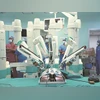 "CRSA proposes inclusion of robotic surgery in medical curriculum via NMC")


