
Microplastics getting deposited in human respiratory tract: Research
Microplastics, containing toxic pollutants and chemicals, are increasingly getting deposited in our human respiratory tract, and can pose serious health risks, warned a study
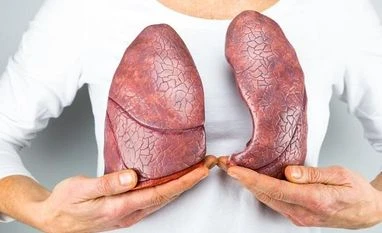 "Microplastics getting deposited in human respiratory tract: Research")
WebinarsNew
Deep DiveNew
Explore Business Standard
Microplastics, containing toxic pollutants and chemicals, are increasingly getting deposited in our human respiratory tract, and can pose serious health risks, warned a study
Microplastics, containing toxic pollutants and chemicals, are increasingly getting deposited in our human respiratory tract, and can pose serious health risks, warned a study.
Researchers in 2022 showed that humans might inhale about 16.2 bits of microplastic every hour, which is equivalent to a credit card over an entire week. And these microplastics -- tiny debris in the environment generated from the degradation of plastic products -- usually contain toxic pollutants and chemicals.
To understand its effects, a team of Australian researchers developed a computational fluid dynamics model to analyse microplastic transport and deposition in the upper airway.
They explored the movement of microplastics with different shapes (spherical, tetrahedral, and cylindrical) and sizes (1.6, 2.56, and 5.56 microns) and under slow and fast breathing conditions.
The findings, published in the journal Physics of Fluids, showed that microplastics tended to collect in hot spots in the nasal cavity and oropharynx, or back of the throat.
"The complicated and highly asymmetric anatomical shape of the airway and complex flow behaviour in the nasal cavity and oropharynx causes the microplastics to deviate from the flow pathline and deposit in those areas," said Mohammad S. Islam, from the University of technology, Sydney.
"The flow speed, particle inertia, and asymmetric anatomy influence the overall deposition and increase the deposition concentration in nasal cavities and the oropharynx area," he added.
Breathing conditions and microplastic size influenced the overall microplastic deposition rate in airways. An increased flow rate led to less deposition, and the largest (5.56 micron) microplastics were deposited in the airways more often than their smaller counterparts.
The authors believe their study highlights the real concern of exposure to and inhalation of microplastics, particularly in areas with high levels of plastic pollution or industrial activity. They hope the results can help inform targeted drug delivery devices and improve health risk assessment.
"This study emphasises the need for greater awareness of the presence and potential health impacts of microplastics in the air we breathe," said YuanTong Gu, from the Queensland University of Technology in Brisbane.
--IANS
rvt/svn/
(Only the headline and picture of this report may have been reworked by the Business Standard staff; the rest of the content is auto-generated from a syndicated feed.)
First Published: Jun 14 2023 | 2:45 PM IST


 Connect with us on WhatsApp