
Risk of surge in Mpox cases very low in India at present: Official sources
Union Health Minister J P Nadda is likely to hold a meeting with officials from the ministry, NCDC and ICMR on Saturday
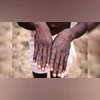 "Risk of surge in Mpox cases very low in India at present: Official sources")
Explore Business Standard

Associate Sponsors
Co-sponsor
Union Health Minister J P Nadda is likely to hold a meeting with officials from the ministry, NCDC and ICMR on Saturday
The risk for an upsurge of Mpox, once known as monkeypox, infection is very low in India at the moment and there is no need to panic, sources in the health ministry said in the wake of WHO declaring the disease a public health emergency of international concern.
Official sources said the last case of monkeypox in India was reported from Kerala in March this year.
According to official data, 30 laboratory confirmed cases of monkeypox since 2022 have been reported in India since 2022.
The health ministry might write to points of entry such as airports, seaports to be alert and vigilant and deal with suspected cases of monkeypox as per the guidelines in terms of isolation and treatment, an official source told PTI.
"At the moment, the risk of a surge in monkeypox infection is very low in India and there is no need to panic," the official source said.
Union Health Minister J P Nadda is likely to hold a meeting with officials from the ministry, NCDC and ICMR on Saturday.
On Wednesday, the WHO said the upsurge of Mpox in the Democratic Republic of the Congo (DRC) and a growing number of countries in Africa constitutes a public health emergency of international concern (PHEIC) under the International Health Regulations (2005) (IHR).
This is the second time the viral infection has been designated as PHEIC.
According to WHO, monkeypox is a viral zoonosis -- a virus transmitted to humans from animals -- with symptoms similar to smallpox, though clinically less severe.
Monkeypox typically manifests itself with fever, rash and swollen lymph nodes and may lead to a range of medical complications. It is usually a self-limited disease with symptoms lasting for two to four weeks.
The 'Guidelines on Management of Monkeypox Disease' issued by the Centre in 2022 stated that human-to-human transmission occurs primarily through large respiratory droplets generally requiring prolonged close contact.
It can also be transmitted through direct contact with body fluids or lesions, and indirect contact with lesion material such as through contaminated clothing or linen of an infected person. Animal-to-human transmission may occur by bite or scratch of infected animals or through bush meat preparation.
The incubation period is usually from six to 13 days and the case fatality rate of monkeypox has historically ranged up to 11 per cent in the general population and higher among children. In recent times, the case fatality rate has been around three to six per cent.
The symptoms include lesions which usually begin within one to three days from the onset of fever, lasting for around two to four weeks and are often described as painful until the healing phase when they become itchy. A notable predilection for palm and soles is characteristic of monkeypox, the guidelines stated.
In July 2022, the multi-country outbreak of Mpox was declared a PHEIC as it spread rapidly via sexual contact across a range of countries where the virus had not been seen before. That PHEIC was declared over in May 2023 after a sustained decline in global cases.
(Only the headline and picture of this report may have been reworked by the Business Standard staff; the rest of the content is auto-generated from a syndicated feed.)
First Published: Aug 16 2024 | 7:02 PM IST

