Home / Immigration / China to launch K-Visa for global talent as US slaps $100,000 H-1B fee
China to launch K-Visa for global talent as US slaps $100,000 H-1B fee
China is set to roll out a new K-Visa for young science and technology professionals from October 1, even as the US imposes a $100,000 fee on H-1B visas
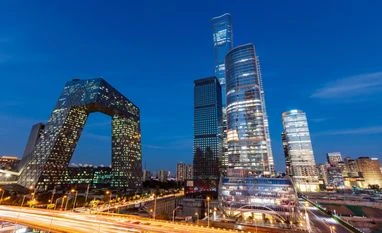
The night view of the city landscape in Beijing, China. Photo: Shutterstock
China has refrained from commenting on US President Donald Trump’s decision to impose a $100,000 fee on H-1B visas, even as it prepares to introduce a new employment visa next month aimed at attracting global professionals.
On Friday, the Trump administration announced a one-time $100,000 charge for each H-1B visa application. Indians account for nearly 71 per cent (over 280,000) of these visas, followed by Chinese professionals with around 11.7 per cent, or more than 46,600.
“We have no comment on the US’s visa policy,” said Foreign Ministry spokesperson Guo Jiakun at a media briefing.
But he also extended an invitation to international workers. “In a globalised world, cross-border flow of talents is instrumental in global technological and economic advancement,” state-run Xinhua news agency quoted him saying. “China welcomes talents from various sectors and fields across the world to come and find their footing in China for the progress of humanity and career success.”
China New K-Visa set for October launch
Last month, China announced the creation of a new work permit called the K-Visa, due to take effect on October 1.
• Approved by the State Council and signed into law by Premier Li Qiang
• Intended for young professionals in science and technology
• Does not require a domestic employer or entity to issue an invitation
• Allows multiple entries, longer validity, and extended stays compared to existing visa types
Applicants will need to meet criteria set by Chinese authorities for foreign youth in science and technology and provide supporting documentation.
K-Visa holders will be allowed to take part in:
Scientific and technological activities
Education and cultural exchanges
Entrepreneurship and business
“China’s development requires the participation of talent from around the world, and China’s development also provides opportunities for them,” Xinhua quoted an official as saying.
China will add the K-Visa to its 12 existing ordinary visa categories. Alongside this, it has introduced visa-free entry for tourists from more than 40 countries for short-term visits to boost travel.
The move is linked to Beijing’s long-term target of becoming a global technology power by 2035. Several programmes already exist to attract international researchers, including the Talented Young Scientist Programme, which brings researchers from Asia and Africa, and the Outstanding Young Scientists (Overseas) Fund Project, which seeks top-level natural scientists and engineers.
Chinese universities have also stepped up efforts with competitive salaries and research grants to draw overseas academics.
While China opens its doors, researchers in the United States face a less certain environment. Since Trump’s return to the White House, federal funding agencies, including the National Science Foundation, have been instructed to reduce overheads.
These cuts affect indirect costs such as laboratory space, infrastructure and administrative support — areas closely tied to postdoctoral research.

 "China to launch K-Visa for global talent as US slaps $100,000 H-1B fee")

