The UK government said on Wednesday it is stepping up efforts to stop international students using study visas as a pathway to claim asylum, particularly from countries with high asylum claim rates such as Pakistan.
“To tackle abuse by foreign nationals who arrive on work and study visas and go on to claim asylum, we are building intelligence on the profile of these individuals to identify them earlier and faster,” a UK Home Office spokesperson told Business Standard.
“We keep the visa system under constant review and where we detect trends, which may undermine our immigration rules, we will not hesitate to take action. Under our plan for change, our upcoming Immigration White Paper will set out a comprehensive plan to restore order to our broken immigration system,” the spokesperson added.
New strategy under preparation
Although officials confirmed that the government is building intelligence around such cases, they have not yet shared details of how this would be carried out.
“We cannot provide detail on measures used to detect abuse of work and study visas, as doing so would provide intelligence to those who exploit the system,” the spokesperson said.
According to Home Office data, asylum claims by Pakistani nationals rose by 79 per cent in the past year, reaching 10,542 claims—the highest among all nationalities.
Further information about the proposed crackdown is expected in the Immigration White Paper, which the government plans to publish later this month.
Labour proposals and visa changes
Labour’s immigration proposals include refusing visas for individuals who fit profiles associated with a higher risk of later claiming asylum. The focus would be on countries with historically high asylum grant rates.
Officials are also exploring ways to use documents submitted during visa applications, such as bank statements, to challenge claims of destitution. The aim is to reduce the number of individuals seeking taxpayer-funded accommodation such as hotels.
The government said these moves are part of a wider strategy to prevent the misuse of work and study routes for entry into the asylum system.
Record asylum numbers
Home Office figures show that more than 108,000 people claimed asylum in the UK last year, the highest number recorded since 1979.
Breakdown of asylum claims:
10,542 Pakistani nationals claimed asylum
2,862 Sri Lankan nationals claimed asylum
2,841 Nigerian nationals claimed asylum
The figures also showed that 732,285 international students were present in the UK during the 2023/24 academic year. India accounted for 107,480 students, while China followed with 98,400.
When it came to asylum grants:
53 per cent of Pakistani and Afghan asylum claims were granted
64 per cent of Iranian claims were granted
98 per cent of Syrian claims were granted
87 per cent of Eritrean claims were granted
99 per cent of Sudanese claims were granted
Indian nationals represented only 1 per cent of asylum grants
Tightening checks on international students
Officials said work is ongoing to strengthen the system so that institutions and the broader immigration framework are protected.
“We are continuing to implement measures to ensure that international students, the institutions they are coming to study at, and the immigration system is protected from those who wish to exploit it. This includes strengthening our ability to identify where individuals are deliberately intending to use visas as a backdoor route to claim asylum in the UK,” the spokesperson told Business Standard.
Rules around support for asylum seekers
Asylum seekers, including those who entered the UK legally on visas, can seek support under sections 98 and 95 of the Immigration and Asylum Act 1999.
An official explained that an individual applying for support must disclose all income, assets, and support available to them. This includes any financial aid received under student scholarships.
“Income and assets taken into account when assessing destitution include cash; savings; investments; land; cars and other vehicles; goods held for the purpose of a trade or other business. This includes information or evidence provided in a visa application,” the spokesperson said.
The destitution threshold is calculated based on the minimum funds needed for adequate accommodation and other essential needs. Any income, assets, or additional support, including student accommodation support, is deducted from this threshold to assess eligibility.

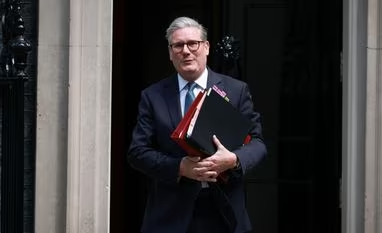 "UK immigration: New rules to tighten study visas and asylum pathways")


 Connect with us on WhatsApp