Home / India News / BSF scales down retreat events at Attari, 2 other locations on Pak border
BSF scales down retreat events at Attari, 2 other locations on Pak border
Twenty-six men, mostly tourists and including a Nepalese citizen, were gunned down in cold blood in a terrorist attack that took place in Jammu and Kashmir's tourist location of Pahalgam on Tuesday
The synchronised ceremony is held in coordination between the two forces involving foot stomping manoeuvres and aggressive body postures by the troops with patriotic songs playing in the background on both sides.
3 min read Last Updated : Apr 24 2025 | 7:21 PM IST
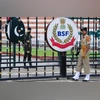
The Border Security Force (BSF) on Thursday said it has "scaled down" the retreat ceremony held at Attari, Hussainiwala and Sadki along the India-Pakistan border in Punjab in the wake of the Pahalgam terrorist attack.
The Jalandhar-headquartered BSF's Punjab frontier, which guards 532 km of this front out of the total 2,200 km, said in a statement that as part of a "calibrated decision", it was "suspending" the symbolic handshake of the Indian guard commander with its counterpart and the border gates will remain closed during the ceremony.
These steps, it said, reflected "India's serious concern over cross-border hostilities and reaffirms that peace and provocation cannot coexist".
Officials said all other drills will continue and common people will be allowed to witness this daily flag-lowering ceremony.
Twenty-six men, mostly tourists and including a Nepalese citizen, were gunned down in cold blood in a terrorist attack that took place in Jammu and Kashmir's tourist location of Pahalgam on Tuesday.
India has launched a diplomatic offensive against Pakistan and taken several counter-measures linking these attacks to the neighbouring country.
The biggest event among the three locations takes place at the Attari border front, a joint or integrated land border check post. It is located about 26 km from Amritsar, opposite Wagah in Pakistan.
Hundreds of domestic visitors, foreign tourists and locals visit the Attari-Wagah border on either side daily to watch the flag-lowering and retreat ceremony conducted in a synchronised fashion by smartly-dressed BSF personnel along with their counterparts Pakistan Rangers.
Similar, but smaller, ceremonies take place at Hussainiwala (Ferozepur district) and Sadki (Abohar district) in Punjab.
India and Pakistan have been traditionally hosting the evening flag-lowering ceremonies at the Attari-Wagah border since 1959. The ceremony goes on for 45-50 minutes.
The synchronised ceremony is held in coordination between the two forces involving foot stomping manoeuvres and aggressive body postures by the troops with patriotic songs playing in the background on both sides.
The ceremony was stopped for a few months during the outbreak of the Covid-19 pandemic.
The drill at Hussainiwala, opposite the Ganda Singh Wala village of Pakistan, also attracts a good number of people while the one at Sadki experiences very few footfalls from the public. It involves just the lowering of flags.
A fourth such drill takes place at Suchetgarh in Jammu but there are no locals involved there. The India International Border runs from Jammu in the north to Punjab, Rajasthan and Gujarat on India's west.


 "BSF scales down retreat events at Attari, 2 other locations on Pak border")

