The Centre, on March 11,
notified rules to implement the contentious Citizenship Amendment Act (CAA) ahead of the upcoming 2024 Lok Sabha elections. The Act grants eligibility for Indian citizenship to Hindu, Christian, Buddhist, Jain, Sikh and Parsi migrants from the Muslim-majority countries of Pakistan, Afghanistan and Bangladesh who entered India before December 31, 2014.
How did the CAA come into effect?
The
Citizenship Amendment Bill was introduced in Parliament on July 15, 2016, as an amendment to the Citizenship Act, 1955. On December 11, 2019, the Rajya Sabha passed the Bill with 125 votes in favour and 99 against. The Bill for the first time allows citizenship on the basis of religion to six communities from Pakistan, Afghanistan and Bangladesh. Subsequently, the then President Ram Nath Kovind gave his assent to the Bill, turning it into an Act.
Centre's stance on CAA
Soon, the country was embroiled in a series of protests against the new Act, critiquing its selective 'mercy' based on religious lines, meant to alienate the Muslim minority in the country. The
Union government had taken the stance that in the three Muslim-majority countries, the six religious minorities have faced persecution, making it India's moral obligation to provide them shelter.
Anti-CAA protests
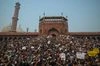
On December 15, student-police clashes broke out at Aligarh Muslim University and Delhi's Jamia Millia Islamia University when police stormed the university campuses. The same day, women began an indefinite sit-in protest at Delhi's Shaheen Bagh, while protests broke out in other parts of the country as well. By January 2020, a series of pleas were filed in the Supreme Court (SC) challenging the CAA.
By the end of January 2020, the clouds of violence around protests were starting to hover. On January 30, a man opened fire at student demonstrators outside Jamia, resulting in injuries to many. Subsequently, in February, communal clashes broke out in Delhi's northeast region.
Anti-CAA protests and Covid-19
The protest at Shaheen Bagh was forced to end as PM Modi announced a nationwide lockdown on March 21 in the wake of the Covid pandemic. Delhi police cleared the protest site on March 24, 2020, and removed the various art installations and graffiti paintings. Eventually, the protests fell silent as the government also refrained from notifying the rules to implement the law.
In December 2023, Union Home Minister Amit Shah reiterated the government's pledge to implement the CAA.
According to reports, in the two months after the CAA was enacted, 69 people were killed in various incidents across the country. While six people were killed in Assam, 19 died in Uttar Pradesh, 2 in Karnataka and 42 were killed by February 28, 2020, in the communal riots in Delhi.
A brief timeline of key events:
December 11, 2019: Citizenship Amendment Bill passed in the Rajya Sabha.
December 15, 2019: Police-students clash as police enter Jamia Millia Islamia University campus forcibly
December 16, 2019: Women start an indefinite sit-in at Shaheen Bagh in protest of CAA and coercive actions of the police against students
December 19, 2019: January 2020: Pleas filed in Supreme Court challenging CAA
February 2020: Communal violence breaks out in Delhi
March 2020: Covid lockdown begins, Shaheen Bagh vacated
December 2023: Amit Shah reinvigorates his promise of implementing CAA ahead of 2024 LS elections