
CJI calls for international collaboration to combat juvenile cybercrimes
Chandrachud is here on a three-day official visit to Nepal at the invitation of Chief Justice of Nepal Bishwombhar Prasad Shrestha
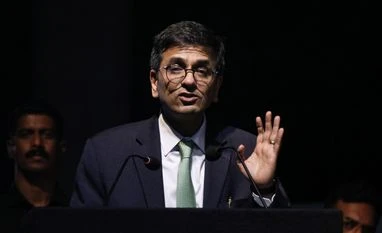 "CJI calls for international collaboration to combat juvenile cybercrimes")
Explore Business Standard
Chandrachud is here on a three-day official visit to Nepal at the invitation of Chief Justice of Nepal Bishwombhar Prasad Shrestha
Chief Justice of India D Y Chandrachud on Saturday said juvenile justice systems must adapt by enhancing international cooperation and sharing best practices to tackle growing transnational digital crimes involving minors, amidst the rapid evolution of technology.
Chandrachud is here on a three-day official visit to Nepal at the invitation of Chief Justice of Nepal Bishwombhar Prasad Shrestha.
Addressing a National Symposium on Juvenile Justice, Chief Justice Chandrachud said, "When discussing juvenile justice, we have to recognise the vulnerabilities and unique needs of children embroiled in legal conflicts and ensure that our justice systems respond with empathy, rehabilitation, and opportunities for reintegration into society."
It is crucial to grasp the multifaceted nature of juvenile justice and its intersections with various dimensions of the societies, he said.
Chandrachud said with technology evolving rapidly, juveniles are diving into cybercrimes like hacking, cyberbullying, online fraud, and digital harassment. The anonymity and accessibility of digital platforms lower barriers to entry, luring young individuals into illicit activities.
He cited the "Momo Challenge" as an example. The 'Momo Challenge' was a viral hoax that spread through social media platforms in 2019, targeting children and adolescents. This hoax purported a series of escalating dares, including self-harm or suicide, although it was later debunked.
"Its rapid dissemination highlights the susceptibility of juveniles to online dangers. There is a need for proactive measures to educate and safeguard young individuals in the digital age, emphasising digital literacy, responsible online behaviour, and effective parental guidance as crucial components in mitigating cyber-related risks," Chandrachud said.
The juvenile justice systems, he said, "must thus adapt by enhancing international cooperation mechanisms and sharing best practices to address the transnational nature of digital crimes involving juveniles".
"This includes establishing protocols for extradition and repatriation, as well as facilitating information sharing and cooperation between law enforcement agencies," the Chief Justice said.
At the domestic level, he said, specific training in child protection rules is essential to ensure that all stakeholders involved in the juvenile justice system have the necessary knowledge and skills to safeguard the rights and well-being of children.
This training should encompass various aspects of child protection, including understanding child development, recognising signs of abuse or neglect, and familiarising oneself with relevant laws and procedures, he said.
Moreover, training programs should incorporate principles of trauma-informed care, emphasising sensitivity and empathy towards juvenile offenders who may have experienced adverse experiences, he said.
Chandrachud said, "Quite often, we focus more on offences committed by juveniles than reflecting on their reformation. It thus becomes essential to acknowledge the complex nature of juvenile delinquency and take a comprehensive approach that addresses the underlying socio-economic factors contributing to such behaviour.
"By investing in strategies that prevent, intervene, and rehabilitate, we can build a society that is more inclusive and provides every child with the opportunity to fulfil their potential," the Chief Justice of India said while analysing the juvenile justice systems of India and Nepal.
He also emphasised that juvenile justice plays a crucial role in shaping a fair and equitable society through its focus on reformative measures.
By placing the well-being of children at the forefront and offering access to rehabilitation and support services, juvenile justice systems help create an environment conducive to the overall growth and development of young offenders, Chandrachud added.
(Only the headline and picture of this report may have been reworked by the Business Standard staff; the rest of the content is auto-generated from a syndicated feed.)
First Published: May 04 2024 | 6:47 PM IST


