
Compensate construction workers affected by Grap even if no court order: SC
SC held that even if there is no specific direction of the court to pay compensation, the NCR States shall pay compensation
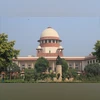 "Compensate construction workers affected by Grap even if no court order: SC")
WebinarsNew
Deep DiveNew
Explore Business Standard
SC held that even if there is no specific direction of the court to pay compensation, the NCR States shall pay compensation
The Supreme Court directed Haryana, Uttar Pradesh and Rajasthan to pay compensation to construction workers whenever they are affected by the closure of activities due to Grap measures in Delhi-NCR even if there is no specific court order on it.
A bench of Justices Abhay S Oka and Ujjal Bhuyan said compensation should be paid to affected workers using funds collected as labour cess.
Anti-pollution measures under Graded Response Action Plan (Grap) are implemented based on average air quality in Delhi-NCR.
The bench said, "As far as 2024 and 2025 are concerned we have issued directions to the state to pay compensation. We make it clear that hereafter whenever the construction activities are required to be closed due to implementation of Grap measures, compensation shall be paid to the affected workers in terms of directions issued by this court dated 24th November 2021." "Even if there is no specific direction of the court to pay compensation, the NCR States shall pay compensation," it said.
During the hearing on Friday, the court was informed that Haryana, in the first and second phases of Grap-4, has paid a compensation to 2,68,759 and 2,24,881 workers, respectively.
Besides this, the process of paying compensation to around 95,000 workers for the January 2025 Grap 4 period is underway.
The counsel for the Delhi government told the court that compensation had been paid to 93,272 workers and the verification process for the remaining registered workers is in progress.
Rajasthan government disclosed that compensation had been paid to 3,197 workers, while Uttar Pradesh informed that compensation had been disbursed to 4,88,246, 4,84,157, and 691 workers affected during phases 1, 2, and 3 of Grap, respectively.
The top court had earlier pulled up the Delhi government for not paying the full subsistence allowance to construction workers, who went without work due to the curbs imposed to combat air pollution in the national capital.
The Delhi government was directed to convene a meeting of the workers' union immediately to ensure their registration.
Similar directions were passed for Rajasthan, where two districts Bharatpur and Alwar, fall in the NCR, besides 14 districts of Haryana and eight districts of UP, to convene a meeting of workers' unions and pay the subsistence allowance.
On December 2, the top court directed the chief secretaries of NCR states to appear before it through video-conferencing to inform whether or not any subsistence allowance was paid to the construction workers who went without work owing to the restrictions.
(Only the headline and picture of this report may have been reworked by the Business Standard staff; the rest of the content is auto-generated from a syndicated feed.)
First Published: Mar 01 2025 | 3:49 PM IST


 Connect with us on WhatsApp