
Delhi HC restrains entities from using actor Jackie Shroff's name, voice
The court said Shroff is a celebrity and this status inherently grants him certain rights over his personality and associated attributes
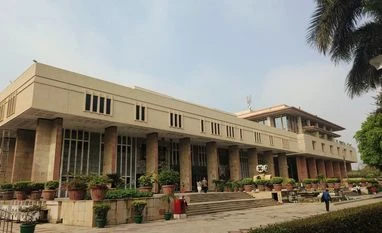 "Delhi HC restrains entities from using actor Jackie Shroff's name, voice")
Explore Business Standard

Associate Sponsors
Co-sponsor
The court said Shroff is a celebrity and this status inherently grants him certain rights over his personality and associated attributes
The Delhi High Court has restrained various entities from using actor Jackie Shroff's name, including sobriquets "Jackie" and "Jaggu Dadda", voice and images for commercial purposes without permission.
Justice Sanjeev Narula, in an interim order dated May 15, said the entities selling wallpapers, T-shirts and posters, etc. on e-commerce websites and operating an artificial intelligence (AI) chatbot platform were prima facie acting in violation of the actor's personality and publicity rights by exploiting and misappropriating his attributes.
The judge also passed the direction against two content creators who published videos of Shroff with "extremely profane words and abuses".
The court said Shroff is a celebrity and this status inherently grants him certain rights over his personality and associated attributes.
"The plaintiff has established a prima facie case for grant of an ex-parte injunction. Balance of convenience lies in his favour and against defendants no. 3-4, 6-7, 13 and 14. If an injunction is not granted in the present case, it will lead to irreparable loss/harm to the Plaintiff, not only financially but also with his right to live with dignity," the court observed.
"It becomes evident that the alleged activities of some of the defendants have, on a prima facie basis, resulted in commercial benefits through the unauthorised exploitation of the plaintiff's personality. Such defendants have utilised the plaintiff's name, image, voice, and other unique characteristics without permission, thereby infringing on his personality and publicity rights," it said.
The court issued notice to certain other entities with respect to alleged violation of his rights, including a YouTube content creator hosting an allegedly derogatory video and a restaurant owner using the registered trademark "Bhidu" for his outlet.
With respect to the video, the court said the actor's portrayal did not introduce any falsehoods. Rather, it embellished his existing public perception as being formidable and it would therefore like to hear the YouTuber before passing any order.
"The format, akin to a meme, spoof, or parody, is part of a burgeoning comedic genre that leverages the cultural resonance of public figures to create engaging content. YouTubers are a growing community, and the substantial viewership of these videos translates into significant revenue for the creators, underscoring that such content is not merely entertainment but also a vital source of livelihood for a considerable segment, particularly, the youth," the court stated.
"Restricting such creative expressions by enjoining defendant no. 5 from producing similar videos or blocking these videos might have far-reaching consequences for this vibrant community. More critically, it could set a precedent that stifles freedom of expression, potentially deterring the public from exercising their right to free speech due to fear of legal repercussions," the court opined.
The court listed the matter for further hearing on October 15 and directed the Department of Telecommunications and the Ministry of Electronics and Information Technology to issue necessary directions to the telecom service providers and internet service providers to block the infringing URLs.
Some defendants said they had taken down the allegedly offending merchandise and the court held that they would be bound by the undertaking.
Shroff had approached the high court earlier this month against the unlicensed use of his name and personality attributes by several entities for commercial gain.
His counsel objected to the "misuse" of his personality and publicity rights through the sale of merchandise and wallpapers as well as "insulting" memes and GIFs and the use of AI.
He also alleged infringement of his trademark rights on Marathi slang "bhidu".
Shroff, who was represented by lawyer Pravin Anand, has contended that individuals cannot be allowed to mislead consumers into buying products thinking they are endorsed by the actor who has worked in over 200 films.
In support of his case, Shroff's counsel had relied on orders passed by the high court in similar lawsuits by actors Amitabh Bachchan and Anil Kapoor.
(Only the headline and picture of this report may have been reworked by the Business Standard staff; the rest of the content is auto-generated from a syndicated feed.)
First Published: May 18 2024 | 12:55 PM IST

