The Delhi High Court, which dismissed a public interest litigation (PIL) challenging the RBI's decision to withdraw the Rs 2,000 denomination banknotes from circulation, has said the notification was part of the central bank's currency management system.
The high court said the Reserve Bank of India (RBI) has only instructed the banks not to issue to its customers notes of Rs 2,000 denomination to ensure they are not in circulation though they remain legal tender.
The fact that the permission to exchange Rs 2,000 notes is available only till September 23, 2023 does not mean that RBI has issued a direction that from September 23, Rs 2,000 banknotes will be demonetised.
"The RBI has, therefore, not exceeded the powers conferred to it under the RBI Act or has violated the Banking Regulation Act, 1949, a bench of Chief Justice Satish Chandra Sharma and Justice Subramonium Prasad said in a judgment which was passed on Monday and became available in public domain on Tuesday.
The high court's verdict came while dismissing a PIL by Rajneesh Bhaskar Gupta who contended that the RBI has no power to withdraw the Rs 2,000 currency notes from circulation and that the power to do so was vested in the central government alone.
The bench said the RBI was well within its power to issue the notification, which is only a part of the currency management system, and the notification is merely a direction to banks to not issue Rs 2,000 currency notes.
The circular is not a direction to print or discontinue to print Rs 2,000 banknotes which is the domain of the Central Government and courts generally do not interfere in policy matters unless the decision is completely arbitrary. In view of the above, the writ petition is dismissed, it said.
The high court added till the time the Rs 2,000 denomination banknotes continue to be a legal tender, it cannot be said that the directions issued by the RBI to various banks to not issue these banknotes from its currency chests, or a request to the public to deposit them in their accounts in as much quantity without their being any restriction is a decision to demonetise Rs 2,000 banknotes.
The RBI decision is only to manage the currency notes which are under circulation, it said.
In his plea, the petitioner had submitted that the RBI has no independent power to direct the non-issue or discontinuance of issue of banknotes of any denominational value, and this power is vested only in the Centre under section 24 (2) of the RBI Act, 1934.
The RBI opposed the plea saying it was only withdrawing the Rs 2,000 notes from circulation which was a currency management exercise and a matter of economic policy.
Earlier, the high court had dismissed a plea by lawyer Ashwini Kumar Upadhya which claimed the notifications issued by the RBI and SBI enabling the exchange of Rs 2,000 denomination banknotes without identity proof were arbitrary and against the laws enacted to curb corruption, saying it has been done to avoid inconvenience to citizens and the court cannot sit as an appellate authority on a policy decision.
The high court has maintained it cannot be said that the government's decision is perverse or arbitrary, or it encourages black money, money laundering, profiteering or abets corruption.
The instant petition stated the RBI notification gave no other reason except clean note policy for the big arbitrary decision of withdrawing the Rs 2,000 denomination banknotes from circulation without analysis of the expected problems of the public at large.
On May 19, the RBI had announced withdrawal of Rs 2,000 currency notes from circulation, and said the existing notes in circulation can either be deposited in bank accounts or exchanged by September 30.
The bank notes in the Rs 2,000 denomination will continue to be a legal tender, the RBI had said in a statement.
In order to ensure operational convenience and to avoid disruption of regular activities of bank branches, the RBI said the exchange of Rs 2,000 bank notes for bank notes of other denominations can be made up to a limit of Rs 20,000 at a time at any bank starting from May 23.
In a communication to the chief general managers of all its local head offices, the State Bank of India (SBI) had said the exchange facility up to a limit of Rs 20,000 at a time will be allowed without obtaining any requisition slip or identity proof.


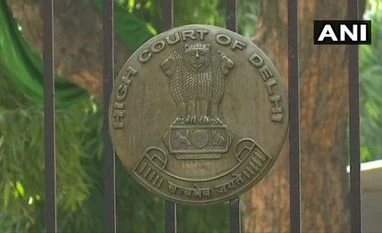 "Delhi High Court dismisses PIL against withdrawal of Rs 2,000 banknotes")

