
DGCA to meet airlines and pilot bodies on revised crew duty, rest norms
The DGCA in September this year had come out with draft guidelines for a fatigue risk management system for airlines
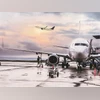 "DGCA to meet airlines and pilot bodies on revised crew duty, rest norms")
Explore Business Standard
The DGCA in September this year had come out with draft guidelines for a fatigue risk management system for airlines
Aviation safety regulator DGCA has convened a meeting with airline operators and pilots' bodies in New Delhi next week to discuss various issues related to the cockpit crew's duty and rest norms following the regulator making certain relaxations, including allowing more night landings and duty time extension for two-pilot Boeing 787 Dreamliner aircraft operations.
The latest flight duty time limitation norms, which entail increased weekly rest periods to 48 hours, extension of night hours, and limiting the number of night landings to only two as against six earlier were initially opposed by the domestic airlines, including IndiGo and Air India.
But they were subsequently rolled out by the DGCA following the Delhi High Court's directives, albeit after a delay of over one year and in a phased manner with the first phase in June and second phase this month.
"The DGCA has called a meeting on Monday with the Federation of Indian Pilots (FIP) and Airlines' Pilots Association (ALPA-India) to discuss the dispensation to various airlines, which will be followed by another meeting on FRMS," said a source.
The pilots' bodies allege that the tweaking in the FDTL norms, which the Government at the time of their announcement in January 2024 had termed as "historic" and the one which "address pilots' fatigue and enhanced flight safety", has been done to cater to the commercial interest of private airlines.
FIP has gone to the extent of filing a contempt plea against the regulator in Delhi High Court.
In India, only two carriers Tata Group-owned Air India and IndiGo operate B787. But unlike Air India aircraft, which are registered with the DGCA here, IndiGo B787 being on damp lease from a foreign lessor don't come under the Indian aviation safety regulator.
"The first meeting apart, the DGCA has also called separate meetings on the same day with airline operators and the FIP and ALPA to discuss the fatigue risk management system," the source said.
The DGCA in September this year had come out with draft guidelines for a fatigue risk management system for airlines, with the proposed framework set to complement the existing flight duty time limitation norms.
In the draft advisory on 'Fatigue Risk Management System (FRMS) Implementation for Flight Crew Members in Scheduled Air Transport Operations', the regulator said the circular provides detailed guidance on FRMS approval processes, implementation requirements, and oversight mechanisms to enhance flight safety through scientific, data-driven fatigue management approaches that complement existing prescriptive FDTL regulations.
But some of the pilots' bodies, including the Indian Commercial Pilots Association (ICPA), have rejected the draft, saying "the country's distinct operational realities, cultural practices, and ongoing judicial directions on FDTL require extreme caution before transitioning from a prescriptive FDTL regime to a performance-based FRMS framework." "Since the domestic airlines did not want to implement these new FDTL due to their commercial interest and had to do it only because of the Court's ruling, they are looking for escape routes. If FRMS is implemented, they can very well bypass these regulations and can formulate their own schemes, which are suited to their commercial interest rather than the flight safety," alleged the source.
(Only the headline and picture of this report may have been reworked by the Business Standard staff; the rest of the content is auto-generated from a syndicated feed.)
First Published: Nov 20 2025 | 11:06 PM IST

