
Evacuation begins in nearby areas of Yamuna as it swells further in Delhi
The river crossed the danger mark of 205.33 metres in Delhi on Monday evening, much earlier than anticipated
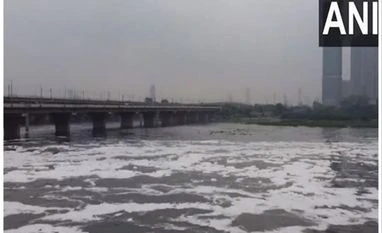 "Evacuation begins in nearby areas of Yamuna as it swells further in Delhi")
Explore Business Standard

Associate Sponsors
Co-sponsor
The river crossed the danger mark of 205.33 metres in Delhi on Monday evening, much earlier than anticipated
The Yamuna in Delhi has exceeded the evacuation mark of 206 metres, prompting the relocation of people residing in flood-prone areas to safer locations, officials said on Tuesday.
The river crossed the danger mark of 205.33 metres in Delhi on Monday evening, much earlier than anticipated.
According to the Central Water Commission's (CWC) flood-monitoring portal, the water level at the Old Railway Bridge rose to 206.28 metres by 6 am on Tuesday with Haryana releasing more water into the river from the Hathnikund barrage in Yamunanagar.
It is expected that the river will rise to 206.65 metres by Tuesday afternoon, before gradually subsiding.
Addressing a press conference on Monday, Chief Minister Arvind Kejriwal had said a flood-like situation is unlikely in Delhi, but the city government is prepared to tackle any eventuality.
He had said the evacuation of people from low-lying areas will start once the river breaches the 206-metre mark.
An official from East Delhi district said the evacuation process began on Monday night after floodwaters entered some areas.
"Only those living in the affected areas have been shifted to camps on higher grounds," he said.
According to the irrigation and flood control department, the flow rate at the Hathnikund barrage had shot up to the 3 lakh cusec mark on Monday.
Normally, the flow rate at the barrage is 352 cusecs, but heavy rainfall in the catchment areas increases the discharge. One cusec is equivalent to 28.32 litres per second.
The water from the barrage takes around two to three days to reach Delhi.
The Delhi government issued a flood warning on Sunday. Authorities have been instructed to stay vigilant and take necessary action in vulnerable areas. Quick response teams and boats have also been deployed.
The Delhi government has set up 16 control rooms to monitor the flood-prone areas and the water level of the Yamuna.
Northwest India has seen incessant rainfall over the last three days, with many areas in Jammu and Kashmir, Uttarakhand, Himachal Pradesh, Haryana, Uttar Pradesh and Rajasthan recording "heavy to extremely heavy" precipitation.
This has resulted in overflowing rivers, creeks and drains that have massively damaged infrastructure and disrupted essential services in Jammu and Kashmir, Himachal Pradesh, Uttarakhand and Punjab.
Delhi witnessed its highest rainfall (153 mm) in a single day in July since 1982 in the 24-hour period ending at 8:30 am on Sunday. The city received an additional 107 mm rainfall in the subsequent 24 hours, exacerbating the situation.
The heavy rain transformed roads into gushing streams, parks into watery labyrinths and marketplaces into submerged realms.
In response to the torrential rain, the Delhi government announced a closure of all schools on Monday and cancelled the Sunday leave of government officials, instructing them to be in the field.
The Yamuna river system's catchment covers parts of Uttar Pradesh, Uttarakhand, Himachal Pradesh, Haryana, Rajasthan, Madhya Pradesh and Delhi.
The low-lying areas near the river in Delhi are considered prone to flooding and are inhabited by around 41,000 people.
Encroachments on the river floodplain have occurred over the years, despite the land belonging to the Delhi Development Authority (DDA), revenue department and private individuals.
The Yamuna breached the danger mark twice in September last year, with the water level reaching 206.38 metres.
In 2019, the river witnessed a peak flow rate of 8.28 lakh cusecs on August 18-19 and the water level rose to 206.6 metres. In 2013, it reached a level of 207.32 metres. The river had swollen to an all-time record water level of 207.49 metres in 1978.
(Only the headline and picture of this report may have been reworked by the Business Standard staff; the rest of the content is auto-generated from a syndicated feed.)
First Published: Jul 11 2023 | 9:05 AM IST

