
Fatalities normal if sent to new environment: Namibia on cheetah deaths
Since March this year, altogether nine of the 20 cheetahs brought from the two countries died
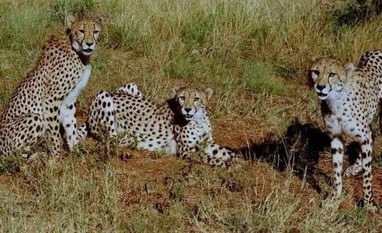 "Fatalities normal if sent to new environment: Namibia on cheetah deaths")
WebinarsNew
Deep DiveNew
Explore Business Standard
Since March this year, altogether nine of the 20 cheetahs brought from the two countries died
High-Commissioner of Namibia to India Gabriel Sinimbo on Saturday said that the deaths of several cheetahs brought from his country and South Africa to Madhya Pradesh are normal as the project involves introducing animals to a new environment.
He also expressed hope that the felines will be able to fully adapt to India's environment.
Since March this year, altogether nine of the 20 cheetahs brought from the two countries died.
When you are introducing animals to a new environment, there could be some challenges like fatalities. It's a part of any project of this nature, Sinimbo said.
Under the Project Cheetah, a total of 20 radio-collared animals were imported from Namibia and South Africa to the Kuno National Park in Sheopur district of Madhya Pradesh and later four cubs were born to Namibian cheetah Jwala'. Out of these 24 felines, nine including three cubs have died.
It's a novel project advocated by the honourable Prime Minister Narendra Modi to reintroduce the large cat species and Namibia is quite pleased with this initiative, given our relationship of supporting each other, Sinimbo said.
The last cheetah death, the ninth one at the KNP, was reported on August 2.
On July 16, the environment ministry said five out of the 20 adult cheetahs brought from Namibia and South Africa died due to natural causes and media reports attributing the deaths to factors like radio collars were based on speculation and hearsay without scientific evidence.
However, the radio collars of six cheetahs at the KNP have been removed for their health examination by veterinarians from the KNP and experts from Namibia and South Africa.
Fourteen cheetahs -- seven males, six females and a female cub -- are kept in enclosures in Kuno. A team comprising Kuno wildlife veterinarians and a Namibian expert regularly monitors their health.
The felines were introduced to KNP last year to establish a free-ranging populationfor the first time since their extinction in India 70 years ago.
(Only the headline and picture of this report may have been reworked by the Business Standard staff; the rest of the content is auto-generated from a syndicated feed.)
First Published: Sep 02 2023 | 6:48 PM IST


 Connect with us on WhatsApp