
Health minister Mandaviya rejects India's low rank in Global Hunger Index
India ranked 111th out of 125 countries in the Global Hunger Index-2023, released on Thursday, with the country reporting the highest child wasting rate at 18.7 per cent
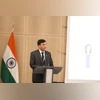 "Health minister Mandaviya rejects India's low rank in Global Hunger Index")
Explore Business Standard

Associate Sponsors
Co-sponsor
India ranked 111th out of 125 countries in the Global Hunger Index-2023, released on Thursday, with the country reporting the highest child wasting rate at 18.7 per cent
Rejecting India's low rank in Global Hunger Index-2023, Union Health Minister Mansukh Mandaviya on Sunday said parameters that are currently being followed for evaluation are not based on conditions specific to the country.
Interacting with students at IIT-Guwahati, he refuted reports of large-scale malnutrition in India.
"Every country and its people have their own body and genetic structures, which also leads to a difference in how malnutrition is measured. What Europe considers as its parameter for determining malnutrition, it may not be applicable for us," he said.
"Some company makes its own index and comes up with a list and we believe it. It can't happen. We are now analysing whether these parameters are applicable for us," he said, replying to a question from a student on India performing poorly in the Global Hunger Index.
India ranked 111th out of 125 countries in the Global Hunger Index-2023, released on Thursday, with the country reporting the highest child wasting rate at 18.7 per cent.
The Global Hunger Index (GHI) is a tool for comprehensively measuring and tracking hunger at global, regional, and national levels.
Mandaviya delivered the 'Amrit Kaal Vimarsh Viksit Bharat @ 2047' lecture at IIT-Guwahati on the topic "Transformation of Healthcare in Amrit Kaal". Soon after that, he participated in the interaction with the students.
Responding to a query on how mental health issues can be addressed, the minister maintained that such problems were not a major concern in India earlier due to the societal setup, especially the presence of joint families.
"Issues were mostly taken care of due to the joint family set up previously. We cannot be blindly following others as we have to understand that for someone in a European country, problems will be very different," he said.
Mandaviya said that while the government is working on enhanced institutional help, societal remedies also have to be explored.
In his speech, Mandaviya stressed the role of students in shaping the future of the country.
He urged them to aim high and then work towards achieving it, assuring help from the government in fulfilling their dreams.
The minister asked the students to draw inspiration from the country's heritage, citing the example Indus Valley civilisation, which had thrived thousands of years ago and had water harvesting and city planning techniques at par with modern times.
He also stressed on research, innovation, patent and commercialisation of products.
(Only the headline and picture of this report may have been reworked by the Business Standard staff; the rest of the content is auto-generated from a syndicated feed.)
First Published: Oct 15 2023 | 9:10 PM IST

