
Health secy issues advisory as AQI worsens, SC enforces Grap IV in Delhi
The advisory includes recommendations for states and UTs to strengthen existing health systems and raise awareness among vulnerable groups and at-risk occupations
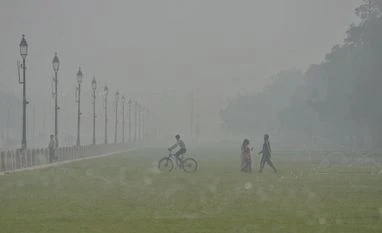 "Health secy issues advisory as AQI worsens, SC enforces Grap IV in Delhi")
Explore Business Standard

Associate Sponsors
Co-sponsor
The advisory includes recommendations for states and UTs to strengthen existing health systems and raise awareness among vulnerable groups and at-risk occupations
The Union Health Secretary issued an updated advisory on Monday to states and union territories regarding air pollution.
The advisory includes recommendations for states and UTs to strengthen existing health systems and raise awareness among vulnerable groups and at-risk occupations.
The advisory suggests developing detailed action plans at the district and city levels to address climate change's health impacts, including strategies to combat air pollution. It also emphasises expanding the network of sentinel hospitals to monitor air pollution-related illnesses within each state or union territory for effective response and monitoring. Air emergency in Delhi: AQI exceeds 1,500; smog halts life, schools closed
The statement outlines a strategy for health departments and healthcare facilities to better prepare for the impacts of air pollution by increasing public awareness through targeted messaging in regional languages across various media channels, educating healthcare workers on air pollution-related health issues, and actively monitoring air pollution-related diseases through sentinel surveillance systems under the National Programme on Climate Change and Human Health (NPCCHH).
The advisory also highlights the heightened risk of air pollution for vulnerable populations, such as children, pregnant women, the elderly, individuals with pre-existing conditions, and workers exposed to pollution.
Air quality has worsened in several cities, including Mumbai, Delhi, and regions in northern India, reaching severe levels. The deteriorating air quality has raised concerns over various health risks. Life-threatening air quality in Delhi-NCR: What can citizens, govt do now?
Meanwhile, in the national capital, the Supreme Court on Monday directed Delhi and all governments in the National Capital Region (NCR) to strictly implement GRAP Stage IV anti-pollution measures, as the Air Quality Index (AQI) remains in the "severe" category.
A bench comprising Justices Abhay S. Oka and Augustine George Masih also directed Delhi-NCR states to immediately form teams to monitor actions required under the plan.
The court further ordered the continuation of GRAP Stage IV measures even if the AQI falls below 450 and instructed all NCR states and the central government to file compliance affidavits.
First Published: Nov 19 2024 | 7:53 AM IST

